For 17 years, I gave my family’s company everything—70-hour weeks, missed birthdays, lost relationships, every ounce of loyalty I had—because I believed my parents when they said we were building a legacy together.
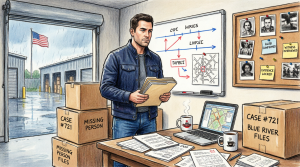
“Well, it’s official. Your brother’s the boss now.”
My father said it over burnt coffee like he was announcing a weather change.
I was standing in the break room at 6:12 on a rainy Thursday, sleeves rolled up, tie loosened, one hand on a stack of invoices I’d been reconciling before the phones started. The fluorescent lights buzzed overhead, the old refrigerator hummed in the corner, and through the narrow window over the sink I could see rain streaking sideways across the parking lot.
For a second, I honestly thought I’d misheard him.
He looked too pleased for it to be a joke.
My father leaned against the counter, grinning in that careless, satisfied way he only did when he believed he’d pulled off something clever. He tossed a pen onto the table near my elbow like he was giving me some ceremonial object and not detonating my life.
“We signed it all over last night,” he said. “Your brother’s the majority owner now. It’s time.”
I stared at him. The words landed, but my brain refused to arrange them into anything real.
“What?”
He chuckled, as though I were being slow on purpose. “Don’t look so shocked. Ethan’s a natural leader. You’ve done great keeping things running, but this is the next step for the company.”
Keeping things running.
That was what he called seventeen years of my life.
Seventeen years of sixty- and seventy-hour weeks. Seventeen years of missing birthdays, canceling dates, learning how to nap upright in my office chair when freight delays pushed us into midnight. Seventeen years of being the one everyone called when the trucks broke down, when a supplier threatened to walk, when payroll didn’t balance, when clients were furious, when the warehouse manager quit without notice, when the janitor stopped showing up and somebody had to scrub the break room floor before inspectors came through.
Keeping things running.
My mother walked in right then carrying a stack of mail and one of her little brittle smiles, the kind she wore when she already knew she was on the wrong side of something and was betting on charm to carry her through.
“Oh, don’t look so surprised,” she said. “You can still support him from the background. You’re good at the operational stuff. Let him focus on the big picture.”
That was when I understood it wasn’t a conversation. It wasn’t even a decision they were inviting me into after the fact. It was an announcement. My future had already been rearranged while I was still busy protecting the machinery of theirs.
My little brother, Ethan, who couldn’t remember to clock in on time half the weeks he bothered to show up. Ethan, who had spent more than one Saturday taking the company van camping with his friends and then tried to expense the gas. Ethan, who called our largest client “that guy from Cleveland” for an entire year because he couldn’t remember his name even though the man represented close to ten percent of our annual revenue.
He was the boss now.
I set my coffee down because suddenly I wasn’t sure whether I might throw it if I kept holding it.
There are moments that divide your life so cleanly you can hear the seam tearing.
That was one of them.
I didn’t yell. I didn’t ask if they were insane, though they were. I didn’t remind them who had negotiated the supplier contracts, built the scheduling systems, stabilized the operations side, trained half the staff, and personally talked two clients out of leaving after Dad botched meetings he shouldn’t have been in.
I just looked at my father for a long second, then at my mother, who wouldn’t quite meet my eyes, and walked out.
Not quit.
Not yet.
But I left that morning without another word and drove aimlessly for three hours through rain that smeared the city into gray streaks. My phone buzzed twice with work calls. I ignored them. One text came from Carla in sales asking where I was because the Johnson account needed revised freight quotes before noon. I stared at the message at a red light and felt the strangest thing.
Not panic.
Not even anger, at first.
Emptiness.
Like something I had been carrying for years had suddenly dropped through my hands and shattered somewhere I couldn’t reach.
I’m twenty-nine now, though that morning I still felt nineteen in all the worst ways. Nineteen and eager and stupid enough to believe hard work could eventually outweigh blood.
That was the original lie, the one my parents fed me in softer words. They never said, “This will all be yours one day.” They were too careful for promises that concrete. What they said instead was, “We’re building something together.” Or, “This is for the family.” Or, “One day all this sacrifice will mean something.”
I was young enough to translate those sentences into hope.
Our family business wasn’t glamorous. It wasn’t one of those sleek tech companies with glass walls and stocked kitchens. It was a regional industrial supply and distribution company with a warehouse attached to a squat office building on the edge of town. We serviced machine shops, fabrication plants, smaller manufacturers—the sort of businesses that needed parts, materials, and deliveries exactly when promised or else they lost money by the hour.
My father had started it from almost nothing in his early thirties. He liked to tell the story at barbecues and holiday dinners. One truck, one folding desk, one line of credit, one man too stubborn to fail. It was a good story, and to be fair, some of it was true. He had built something from scratch.
What he never admitted was that after a certain point, he stopped building it and started taking credit for the people who kept it from collapsing.
That was where I came in.
I grew up in that building. After school, I did homework at the back desk by dispatch while drivers came and went. In summer, I swept the warehouse, sorted invoices, stacked boxes, learned how to read inventory sheets before I learned how to cook. By sixteen, I could identify half our clients from the sound of their voice over speakerphone. By eighteen, I could load a truck faster than some of the guys Dad hired full time.
My mother always said I had a head for systems. Dad said I had good instincts, which was his highest form of praise because he believed instincts were just ambition that hadn’t softened into overthinking yet.
Ethan, meanwhile, grew up differently inside the same walls.
He was younger by four years and spent most of his life being explained to everyone. Ethan’s creative. Ethan’s not built for routine. Ethan thinks bigger than logistics and trucks and manifests. If I was expected to become useful, Ethan was expected to become special.
When he forgot things, it was because his mind was elsewhere. When I forgot things, it was because I was careless.
When he got bored, my parents called him restless. When I got tired, they called me ungrateful.
You can build an entire family mythology out of those small distinctions if you repeat them long enough.
I stayed after high school instead of leaving for a university I couldn’t really afford anyway. My father called it practical. My mother called it loyal. At nineteen, I called it temporary. I’d help a few years, save money, maybe study at night, maybe eventually move into something bigger with real authority.
Then Dad’s operations manager left, and temporary became useful.
Then a warehouse supervisor quit after a shouting match, and useful became necessary.
Then the dispatch system failed, and necessary became indispensable.
It happened slowly enough that I didn’t notice the trap closing. That’s how family traps work. They don’t clang shut all at once. They tighten around your routine until what once felt generous becomes expected.
By twenty-two, my friends had started careers elsewhere and I was the first one in and the last one out at a company that still technically belonged to my father.
By twenty-five, I’d pulled the place through two supplier crises, one tax audit, three major staffing turnovers, and the kind of customer blowups that end companies if handled by the wrong person. Dad still introduced it as “my business” at dinners, but internally, everyone knew who kept the wheels on.
I knew it too. That was the dangerous part. I had just enough proof of my own value to keep believing I would eventually be acknowledged properly.
My mother encouraged that hope without ever actually saying anything definite. “Your father sees what you do,” she’d tell me. Or, “Ethan’s not ready for serious responsibility like you are.” Or my favorite, “You know you’re the dependable one.”
The dependable one.
That phrase sounds like praise right up until you realize it really means: the one we can take for granted without consequences.
The real bitterness didn’t come from them loving Ethan more. Families are messy. Favoritism is rarely admitted that cleanly. It came from the fact that they turned my competence into the justification for why I deserved less. Ethan needed support because he was still finding himself. Ethan needed room because he had ideas. Ethan needed a longer leash because he wasn’t naturally structured.
I didn’t need anything, apparently, because I had made myself useful enough to survive without it.
And for years, I let that logic stand.
The company grew. We took on larger contracts. We landed regional accounts. We upgraded systems I had mostly built from necessity and sleeplessness. We hired more staff. We got trucks with the logo freshly wrapped down the sides, and my father started talking about legacy.
That word should have warned me.
Legacy sounds noble until you realize it usually means inheritance, not merit.
Two years before that Thursday in the break room, Ethan started “coming in” more. At first, it was occasional. He’d show up around ten in the morning in expensive sneakers and sit in on meetings with an expression that suggested he believed observation was effort. Dad loved it. Mom called it growth. Ethan called it “learning the ropes.”
The ropes, apparently, involved ignoring emails, being charming in exactly the wrong situations, and discussing “big picture strategy” without understanding the small systems holding the whole thing together.
Still, I told myself what I’d always told myself. He’s just visiting the fantasy version of adulthood. He’ll get bored. Dad is posturing. Mom is managing his ego. It doesn’t change what I do. It doesn’t change who clients call when things go wrong.
Then Dad started inviting Ethan into meetings I wasn’t told about.
Then Ethan got a company email alias that forwarded important correspondence to him “for visibility.”
Then my mother started saying things like, “It’s good for you to have someone to share the load with.”
Share the load. Ethan had not yet lifted a grocery bag’s worth of load, but already the language was rearranging the world in his favor.
And then came that rainy Thursday when Dad told me with a smile that the company had been signed over to my brother.
The next morning, I came back because disbelief still has habits.
And there was Ethan, sitting in my chair.
Not metaphorically. Literally.
Feet up on my desk, drinking a soda from the company fridge, grinning like a kid who’d found the keys to someone else’s car and thought that meant he knew how to drive.
“Management’s looking a little different these days, huh?” he said.
I stood in the doorway and looked at him. Really looked. At the smugness that was half performance, half panic. At the way he kept his body loose and lazy because he thought confidence was mostly posture.
“Move,” I said.
He laughed. “Come on, man. Lighten up. Dad says I should start learning the ropes. Thought I’d start here.”
Mom appeared in the hallway right then, smiling too brightly. “Dylan, be supportive. This is a big responsibility for your brother.”
That was the moment something inside me shifted permanently.
Not because Ethan sat in my chair. Not even because my parents handed him the company without warning. But because I realized, with cold perfect clarity, that they had not only taken the business away from me. They expected me to keep carrying it anyway.
They wanted Ethan to wear authority the way he wore one of Dad’s old jackets—too large, badly fitted, all appearance. And they wanted me in the background making sure no one noticed the sleeves were empty.
That was when I stopped staying late.
It sounds small. Petty, maybe. But when your whole identity has been built around being the person who fills every gap before anyone else notices it exists, stopping is not passive. It is seismic.
If something broke at eight p.m., I let it wait until morning.
If Ethan forgot to place an order, I didn’t call the supplier at home to smooth it over.
If a client asked a question outside my actual role, I answered only what was mine to answer and let the silence fall where it needed to fall.
The first time Dad called me after hours demanding I fix a shipment Ethan had mishandled, I said, “That’s not my problem anymore.”
He went silent long enough that I checked the screen to make sure the call hadn’t dropped.
Two weeks later, our biggest supplier pulled out.
We’d relied on that account for years. They’d stayed with us through pricing fluctuations, shipping issues, a warehouse leak, and one truly catastrophic quarter where Dad nearly scared them off for good with his “I can charm anyone” routine. I had been the one maintaining that relationship—quarterly check-ins, problem solving, favors called in quietly when schedules slipped.
When they left, Dad called in a panic.
“You need to call them,” he said. “Fix this.”
I was sitting on my couch at home, shoes off, a frozen pizza in the oven, and for the first time in my adult life I felt no obligation rise in me at all.
“Let the new boss handle it,” I said.
He breathed hard into the phone. “We can’t afford to lose them.”
“You should have thought about that before you made your decision,” I said, and hung up.
I wish I could say that moment felt triumphant.
It didn’t.
It felt strange. Hollow and clean. Like pulling your hand away from a machine after years of believing it would take your whole arm with it.
From there, things unraveled in exactly the way I knew they would.
Orders got delayed. Clients started getting vague excuses instead of answers. Staff morale dropped fast because when operations are built around one person’s invisible competence, everyone feels it when that competence stops leaking into the system for free.
But my life—my actual life outside that building—got quiet for the first time in years.
I slept past six on weekends. I started going to the gym regularly, not because I was trying to become some reborn version of myself but because I suddenly had evenings and needed somewhere to put the adrenaline that no longer got burned off by crisis management. I cooked actual meals. I saw old friends. I said yes to a baseball game and then yes to drinks after and realized halfway through the second beer that no one had called me for three hours and the world had not ended.
It was disorienting how peaceful freedom felt once I stopped mistaking constant stress for purpose.
Then my parents showed up at my apartment.
It was a Sunday morning. I was halfway through making eggs when the buzzer rang. I glanced at the clock—8:14 a.m.—and knew immediately it wasn’t social.
When I opened the door, there they were in the hallway like two children sent home from school with a disciplinary note. Dad’s jaw was set so tightly I could see the muscle jumping. Mom wore the expression she always wore when she wanted to seem reasonable in a situation that had already become unreasonable by her own choices.
“Can we come in?” she asked.
I stepped aside.
They came into the apartment looking around in the way parents do when they are trying to reconcile the version of your life they’ve decided to believe with the evidence standing in front of them. Clean counters. Real furniture. Bookshelves. Framed photos. No wreckage. No chaos. Nothing about my place suggested a man who needed rescuing.
Dad sat on the edge of the couch but didn’t lean back. Mom perched next to him. Neither of them commented on anything. That alone told me how badly things were going.
“Things have been difficult at the company,” Mom began.
I stayed standing.
Dad blew out a breath and looked at the floor before finally saying the sentence he had never imagined he’d have to say to me.
“We need your help, Dylan.”
Not we miss you. Not we were wrong.
We need your help.
I folded my arms. “Call your CEO.”
Mom winced. Dad looked up sharply. “Don’t be smart.”
“Why not? You weren’t exactly consulting me when you signed him in.”
Dad’s nostrils flared, but he pushed through it. “You know those supplier relationships better than anyone. If we don’t get them back, we’re in serious trouble.”
The word trouble sat in the room like a creature trying to look smaller than it was.
I wish I could tell you I felt satisfaction seeing them there, diminished and asking. But mostly I felt tired. Tired of being wanted only in emergencies. Tired of being told I was family when they needed labor and independent when I needed fairness.
“You made your decision,” I said. “Figure out how to live with it.”
Mom leaned forward, hands clasped so tightly her knuckles had gone white. “Please don’t make this harder than it already is.”
I almost laughed.
Harder.
As if difficulty had arrived in their lives for the first time and I was responsible for its bad manners.
Dad’s voice went rough. “If this business goes under, we all lose.”
That word again.
We.
The same man who had written me out without warning now wanted to drape himself in collective consequences.
I looked at him for a long moment and said nothing, because the truth was I did not know exactly what I wanted yet. Part of me still wanted to march back in there, pull them out of the fire, and force them to watch while I saved the whole thing. Another part wanted them to feel, finally, the full consequence of treating me as expendable.
I didn’t answer because I hadn’t decided which version of myself was about to live.
“Go home,” I said eventually. “Fix your mess.”
Dad muttered something under his breath as they left, but I didn’t ask him to repeat it.
The peace that followed was strange and fragile.
I began getting messages from employees. Not dramatic ones at first. Small complaints. Questions. Rumors. Then the tone changed.
Carla, our best sales rep, texted me one night around ten.
Is this really what you wanted? Watching us all go down with the ship?
That one hit.
Because no, I had never wanted the employees to suffer. Those people were my people more than my family had been for years. We’d survived quarter-end crunches together, inventory mistakes, impossible deadlines. We’d eaten cold pizza at midnight and joked ourselves through disasters. My anger was aimed up, not sideways.
I didn’t answer Carla right away because I didn’t have an answer that would fix anything.
Then Ethan showed up at my gym.
I was re-racking dumbbells when I saw him through the mirror standing awkwardly by the water fountain in jeans and a hoodie that still had a fold line from being new. He looked like he’d run there or been running from something. Sweat darkened the back of his shirt. His face had changed in the month since he became “the boss.” Not older, exactly. More thinned out. Less padded by certainty.
“You’ve got to come back,” he said without preamble when I walked over.
I grabbed my water bottle and just stared at him. “You’ve never set foot in this gym before.”
He dragged a hand through his hair. “Because I don’t belong here. Happy?”
“What’s wrong?”
He laughed once, but it was all nerves. “Everything. The numbers are bad. Dad’s yelling all the time. Mom’s talking about selling the house to cover payroll. I don’t know what I’m doing, man. They keep saying I should trust my instincts, but I don’t have instincts for this stuff.”
There was so much naked panic in that sentence that for one dangerous second I almost felt sorry for him.
Then I remembered him in my chair.
I remembered the lazy grin. The “learning the ropes” line. The months of him walking around with my role draped over him like a costume.
“This is what you wanted,” I said.
He swallowed. “No. This is what they wanted. They just told me it was mine.” His voice cracked on the last word. “I didn’t ask for this.”
That stopped me.
Not because it absolved him. It didn’t. He had enjoyed the promotion. He had benefited from every bit of favoritism offered to him his entire life. But there, in the parking lot outside my gym, I saw a shape I hadn’t allowed myself to see clearly before.
He was also a product of them.
Not the same way I was. He was damaged by excess where I was damaged by absence. But he had been cast in a role too, and the role had always been simpler than responsibility.
I looked at him for a long moment.
“I can’t fix this for you,” I said.
His shoulders sagged. “I know.”
“But I might be willing to help,” I added, “on my terms.”
He blinked, confused and hopeful all at once. “What does that mean?”
“You’ll find out,” I said, and walked away before I could explain more.
That night I sat at my kitchen table with a legal pad and started making lists.
Not emotional ones. Operational ones.
As I wrote, something settled into place inside me.
For the first time since the break room announcement, I felt calm.
Not forgiving. Not softened. Just clear.
I had more power than I had realized—not because my name was on anything official, but because my fingerprints were on everything that mattered. Every relationship. Every process. Every piece of trust that had quietly accumulated over seventeen years.
And then they crossed the final line.
I woke up the next Monday to a flood of messages—missed calls, texts from employees, Carla again in all caps.
CALL ME ASAP. IT’S BAD.
I got dressed and drove to the office before coffee because something in her wording felt different. Not just another delay. Not another supplier issue. Something worse.
The parking lot was half empty when I arrived.
That alone made my stomach drop.
Monday mornings used to be controlled chaos. Trucks lined up, staff coming in half-awake, the front office already loud with questions before eight. Now there were open spaces where cars should have been, and the whole building felt like it was holding its breath.
Carla met me just inside the lobby, pale and furious.
“They laid off half the floor staff,” she said. “No notice. No severance. People showed up this morning and their badges didn’t work.”
“What?”
She nodded. “They’re clearing out lockers right now.”
I marched straight down the hall to the office that had once been mine.
The door was shut. I didn’t knock.
Inside, Dad was pacing, Mom sat rigid in a guest chair, and Ethan stood behind the desk looking like he hadn’t slept in days.
They all turned at once.
“Good,” Dad said. “You’re here. Maybe you can explain to Carla and the rest of the staff that this was necessary.”
“Necessary?” I repeated. “You fired people who’ve worked here for fifteen years with no notice.”
Mom clasped her hands in her lap, as if posture could disguise cruelty. “It wasn’t easy, Dylan. Payroll was killing us.”
“You could have sold assets. Restructured. Negotiated with vendors. There were options.”
Dad’s face hardened. “I don’t need a lecture from someone who walked away when things got hard.”
I took a step closer. “I walked away because you lied to me. You signed me out of this company and handed my work to someone who didn’t even want it. Don’t pretend this is my fault.”
Silence.
Then Mom said, “We used your savings.”
I felt the whole room go still inside me.
“What?”
She glanced at Dad like maybe he would stop her, but he didn’t.
“The business account was dry,” she said. “We had to move some money around to make payroll last month. Your personal savings were sitting there and—”
“You what?” My voice cracked like a whip.
Dad stepped forward, already defensive. “You weren’t using it. And we were desperate.”
That money was ten years of restraint. Ten years of taking less salary than I’d earned because I believed equity or ownership or at least good faith was coming. House money. Future money. Freedom money.
“You stole from me,” I said.
Mom’s eyes filled, but not with shame. With irritation. “Don’t be dramatic.”
I slammed my hand on the desk so hard a coffee mug rattled.
“You stole from me.”
The silence afterward had a different quality than before. Even Ethan looked sick.
Dad folded his arms. “If the company survives, you’ll get it back.”
“If?”
He didn’t answer.
That was the moment everything changed from emotional betrayal to war.
When I got home, I went through every account, every email, every shared drive I still had legal access to. My name might not have been on the ownership documents anymore, but I had years of operational records, signed directives, vendor communications, cash flow plans, board notes, and enough evidence to reconstruct the entire skeleton of the business.
And three days later, as if to remove the last trace of doubt, a letter arrived.
From the company’s legal department—or what was left of it.
They were suing me for breach of fiduciary duty.
Their claim, in polished language designed to sound sober and inevitable, was that by withdrawing my support and refusing to assist with transition I had caused material harm to the company.
I laughed out loud when I read it. The sound startled me because it wasn’t bitter. It was almost delighted.
They were trying to make me the scapegoat for a collapse they had engineered with their own vanity.
That lawsuit letter was the moment my anger became useful.
I stopped returning calls. Deleted voicemails. Left my phone face down when Ethan texted, Please just talk to me.
Instead, I started pulling together every piece of documentation I had. Emails. Signed contracts. Payment histories. Text messages where Dad had explicitly directed me to make operational decisions he was now pretending were mine alone.
I backed up everything to an encrypted drive and then to a second one stored off-site because if there is one thing years in logistics teaches you, it’s redundancy.
Then I started talking to people quietly.
Not gossiping. Not smearing. Just asking honest questions.
Marcus, our main supplier rep, met me for coffee and admitted the truth without much prompting.
“Your brother tried to renegotiate terms we’d had for years,” he said, shaking his head. “He acted like we should be grateful to keep your business. It was insulting.”
He stirred his coffee and looked at me carefully.
“Shame, really. You always kept things fair.”
That one sentence told me more than any spreadsheet could. I had not been imagining my importance. It had simply been more convenient for my family to call it support than to call it skill.
I called a few clients too. Casual conversations. No pressure. How are things going? Any issues lately? Have you thought about next quarter?
The answers were always some version of the same story: missed emails, late orders, confusion, a lack of confidence.
One client—top three account, significant volume—said it outright.
“We’re giving them thirty more days before we switch providers.”
I thanked him for the honesty and wrote it down.
Then I began rebuilding myself outside of them.
Consulting work came first, because people had been asking for years and I had always been “too busy” saving my family’s company to take any of it. Apparently, once word got around that I was available, people were more than happy to pay for the expertise they had watched me give away under someone else’s banner.
The first consulting invoice I sent under my own name felt almost intimate. No family surname attached. No false legacy. Just me, my work, my rate.
The money started to come in. Not enough to replace everything immediately, but enough that my bank account felt like mine again.
Meanwhile, their company kept bleeding.
Sometimes I drove past the building in the evening just to look. Not because I missed it. Because I needed to watch reality work on them slowly. Fewer trucks in the lot. Fewer lights on. Less motion near the loading bays.
Carla called one night sounding close to tears.
“They cut our hours again,” she said. “Thirty hours a week until further notice. People can’t pay rent on that.”
I looked at the ceiling for a long moment before answering.
“Hold on a little longer,” I said. “Things are going to change.”
At the time I didn’t know exactly how yet.
But I meant it.
Then Ethan showed up at my apartment again.
He looked worse than before—eyes hollow, skin pale, movements jerky from too much caffeine and too little sleep. But there was something else in him now too. Relief, maybe. The relief of a man who has finally stopped pretending he knows what he’s doing.
“Dad’s furious,” he said as soon as I let him in. “He says you threatened him.”
“I informed him of reality.”
Ethan snorted weakly. “Same difference to him.”
He sat on my couch and rubbed both hands over his face.
“They’re selling equipment now,” he said. “Talking about another loan. Mom barely speaks to me unless it’s to ask why I can’t fix it. Dad acts like if I just man up harder everything will reverse.”
He laughed without humor and looked at me.
“I can’t do this anymore.”
I stood in the kitchen doorway listening.
“I never wanted this job, Dylan,” he said. “Not really. They just told me it was mine, told me I’d figure it out, told me you were too rigid and I had better instincts. But instincts don’t run payroll. They don’t patch three years of bad decisions in a month.”
That was the first time I saw my brother not as the enemy, not exactly, but as another casualty of our parents’ need to cast people in roles that made them feel powerful.
“You’re right,” I said. “They don’t.”
He looked up. “If you really are building something new… I want in.”
That surprised me enough that I didn’t answer right away.
He held my gaze. “I’m serious. I’m done being their puppet.”
For a long moment, I studied him.
The golden child. The chosen one. The boy who had gotten everything easier, yes. But also the boy who had been handed importance instead of earning confidence and was now drowning in the difference.
“Fine,” I said at last. “But if you’re in, you play by my rules. No shortcuts. No family entitlement. No being handed anything you didn’t earn.”
He nodded immediately. “Deal.”
It wasn’t forgiveness. It wasn’t some sweeping brotherly reconciliation.
It was recognition.
And maybe that was enough to start with.
From there, the plan became tangible.
I called the banker and locked funding. I signed a lease on an empty warehouse on the edge of town that had been sitting unused for months, its concrete floors dusty and its future still negotiable. I drafted offer letters for the employees I wanted most—Carla, Miguel, Lacy, a few others who had kept the old place alive while management played succession theater.
Then missed payroll happened.
When Carla called to say people were literally walking out midshift, I didn’t feel guilty.
I felt ready.
That night I sent a single message to the people on my list.
Meet me at the warehouse tomorrow, 7:00 p.m. No questions. Trust me.
They came.
Carla first, coat wrapped tight around her, eyes alert. Then Miguel from shipping, shoulders still broad from years of lifting what other people delayed. Then Lacy from accounting, always quiet until numbers were wrong.
Soon there were nearly a dozen of them standing in the warehouse under bare industrial lights, breath visible in the cold.
I stepped into the center and took a breath.
“I called you here because it’s time,” I said. “You all know what’s happening over there. I’m not asking you to save it. I’m asking you to help me build something new.”
There was a long silence.
Then Carla crossed her arms. “With what? We don’t have trucks. We don’t have machines. We don’t have payroll.”
I smiled.
“We will.”
I explained the funding. The lease. The supplier agreements already lined up. The client conversations already moving. The way this would work—leaner, faster, built on actual operations instead of family mythology.
By the time I finished, the air in the room had changed.
Carla stepped forward first and held out her hand.
“I’m in,” she said.
One by one, the others followed.
We stayed there for hours with folding tables, laptops, and bad coffee mapping out the next version of our lives.
By the time I left that night, the warehouse no longer looked empty.
It looked possible.
The next piece was leverage.
Lacy slid a folder across the table at our second planning meeting and said, “They’re months behind on vendor payments.”
I opened it and felt something like cold satisfaction spread through me.
If someone else made better offers—faster payment, clearer terms, respect—those vendors would leave my parents in a heartbeat.
So that’s what I offered.
Not through threats. Through competence.
I called every vendor relationship I had. I laid out my vision: smaller, more agile, guaranteed payment on time, no renegotiations disguised as family arrogance. Almost all of them said yes before I even finished the second paragraph.
Meanwhile, Ethan fed me information quietly.
“They’re talking about selling the last truck.”
“Let them.”
“Dad says if he can just hold on another month, clients will come back.”
“They won’t.”
He stopped arguing with me after that. Maybe because he knew I was right. Maybe because some part of him was relieved someone finally said the thing out loud.
Then I called the family meeting.
I didn’t want them finding out about the new company from gossip or from a client defection notice. I wanted to tell them myself.
I wanted them to hear it from the son they had dismissed.
When I walked into my parents’ kitchen that Saturday, the room felt exactly like the place where all our family myths had been manufactured. Same polished table. Same window over the sink. Same refrigerator hum. Different power.
Mom sat with tea she clearly wasn’t drinking. Dad stood by the window like he wanted the posture of a patriarch even though the house itself looked tired now. Ethan sat at the far end of the table, silent.
“What is this about?” Mom asked, voice cool.
I sat down across from them, folded my hands, and looked at each of them in turn.
“I wanted to tell you face to face,” I said. “I’m starting my own company.”
Mom blinked. Dad’s shoulders tightened. Ethan didn’t move.
“I’ve got funding,” I continued. “A facility. A team. Suppliers ready to move. When your company goes under—and it will—I’ll be in position to take over the contracts worth saving.”
Dad’s face turned red instantly. “You think you can just steal what I built?”
“I’m not stealing anything,” I said. “I’m offering people a lifeboat.”
Mom’s voice sharpened. “This is revenge.”
I met her gaze without flinching. “Yes,” I said. “And it’s also justice.”
That shut the room up.
“You signed me out of my own future,” I said. “You stole my savings. You sued me for not fixing the mess you made. I’m done pretending that’s just family conflict. This is me taking back control.”
Then Ethan spoke.
“I’m with him.”
Mom whipped toward him as if she hadn’t expected he’d ever choose a sentence over their version of him.
“You can’t mean that.”
“I do,” he said, and there was no tremor in his voice. “I’m done being your scapegoat too.”
The silence that followed felt like a structure failing.
Not loudly. Not dramatically. Just the sound of support beams realizing they’ve been asked to hold too much dishonesty for too long.
Dad slammed his palm on the table.
“If you think you’re going to destroy us and get away with it—”
I stood up before he could finish.
“I’m not destroying you,” I said. “You did that yourselves. I’m just making sure when the dust settles, something decent survives.”
I left them there.
And for the first time in my life, I knew with absolute certainty the power had shifted.
Launch day didn’t feel like a launch day.
It felt like the first day of my real life.
The warehouse smelled like fresh paint, oil, and cold concrete. Machines hummed softly as they were tested and recalibrated. Carla walked the floor with a clipboard like she’d been waiting years for someone to let her lead without interference. Miguel was already barking cheerful orders near the loading bay. Lacy had a laptop open at a folding desk, tracking first payments and contracts with a look on her face I had never once seen at the old company.
Relief.
By nine a.m., our first client arrived in person to sign paperwork.
By noon, two more had committed.
By the end of the week, we had replaced nearly every major account my parents’ company had lost and taken half the ones they still hoped to save.
But what mattered most wasn’t the clients. It was the feeling in the room.
People were laughing again.
Not because they were avoiding fear. Because they believed effort and fairness might actually belong in the same building.
We paid everyone on time. Early, even. I gave signing bonuses out of my own pocket because if you’re going to build something new, people should feel the difference immediately.
One of the new hires cried in the break room when she saw the deposit hit.
“No boss has ever done that for me,” she said.
I nodded, but inside something shifted.
This was bigger than revenge now.
This was repair.
Not for my family. For the people they had treated as disposable.
When my parents finally showed up at the warehouse a few weeks later, the parking lot was full. Trucks moving. Staff crossing between bays. Music playing from a radio in the back. Movement everywhere.
I met them just inside the loading entrance.
Mom looked pale. Dad looked furious. Ethan stood a few feet behind them—not with me yet exactly, but not with them anymore either.
“This is what you’ve been doing?” Dad demanded, sweeping an arm across the floor.
“This is what I’ve built,” I corrected him.
“You stole everything from us,” Mom said.
“No,” I replied. “I offered you chance after chance to do the right thing. You ignored me. You stole from me. You sued me. You blamed everyone but yourselves. I didn’t steal this. I earned it.”
The warehouse kept moving around us. Forklift beeps. Laughter. Clipboards. Work.
The contrast was its own verdict.
Then Mom tried one final thing.
“You could still come back,” she said softly. “We could rebuild as a family.”
I actually laughed.
“Rebuild what?” I asked. “The version where I do the work and one of you gets the credit?”
Dad’s face hardened. “You think this makes you better than us?”
“No,” I said. “It just makes me free.”
They left without another word.
A week later, the bank seized what was left of the old company.
The largest loan defaulted. Equipment, trucks, office furniture—everything went to auction.
I wore my best suit and bought it all back for pennies on the dollar.
Machines I’d operated. Trucks I’d dispatched. Chairs I’d sat in while building a future they’d signed away.
When the paperwork was done and the keys were in my hand, I drove once more to the old office building.
Dad was there.
Sitting alone inside the front office like a king without a throne.
“You,” he said when I walked in, voice shaking with fury.
“Me,” I said.
I set the keys down on the counter between us.
“These are mine now.”
He looked at them, then at me, his face hollowing out around the edges.
“You think this makes you better than us?”
It was the same question, but this time there was nothing left in it except grief badly disguised as contempt.
“No,” I said again. “It just makes me free.”
Then I turned and walked out.
Months later, when the neighboring warehouse lease came through because we had already outgrown the first one, Carla stood beside me at a company barbecue and looked out over the parking lot full of employees and families and kids running between folding tables.
“They talk about you like you’re some kind of legend,” she said.
I looked at the people around us—laughing, eating, safe in work that respected them.
“No,” I said. “I’m just finally where I’m supposed to be.”
That night, after everyone left and the music cut off and the warehouse lights dimmed one row at a time, I walked to the front doors with the keys in my hand.
I looked once down the empty road that led back toward my parents’ side of town.
Then I locked the door behind me, smiled into the quiet, and whispered the words I’d been waiting years to say.
“You don’t get to choose my worth anymore.”