PART 2: THE SIGNATURE OF A DEAD MAN
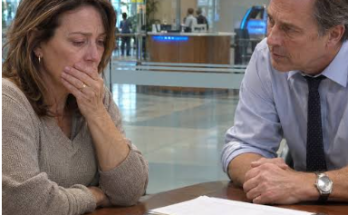
I stared at Dave Carlson across the little glass-walled office, but for several seconds, I couldn’t hear anything except the pounding of my own heart.
“Was your father actually able to sign his own name in February?”
It was such a simple question.
Seven words that should have had a simple answer.
But the moment he asked it, something inside me shifted, and memories I had spent months trying to make sense of suddenly began arranging themselves into a picture so ugly that I almost wished I could forget it again.
I remembered Dad sitting in his favorite brown recliner in January, a blanket tucked around his knees even though the furnace was running.
I remembered the way his right hand trembled when he tried to lift his coffee cup.
I remembered Brian standing beside him, impatiently reaching for the cup and saying, “Here, Dad. You’re making a mess.”
And I remembered Dad looking at me afterward.
Not embarrassed.
Not angry.
Frightened.
At the time, I thought he was frightened of getting old.
Now I wasn’t so sure.
“Ma’am?”
Dave’s voice pulled me back into the office.
I looked down at the loan documents.
Forty thousand dollars.
One hundred and eighty thousand dollars.
Two hundred and twenty thousand dollars in borrowed money, all tied to a man who had spent his final months struggling to hold a spoon.
“No,” I whispered.
Dave leaned forward.
“I’m sorry?”
“My father couldn’t sign his name in February.”
The room seemed to grow colder.
“Are you certain?”
I nodded, slowly at first, then harder.
“His hands were almost useless. He had terrible weakness after his stroke. Some days he couldn’t even button his own shirt.”
Dave didn’t move.
“Was that documented by a physician?”
“Of course. He had a neurologist. Physical therapy. Home health nurses. Everything.”
“And your brother knew?”
I laughed.
It wasn’t a happy sound.
“Brian knew better than anyone. He was the one who kept telling me Dad was getting worse. He was the one who said Dad needed privacy. He was the one who told me not to bother him with paperwork.”
Dave looked down at the February application.
Then he turned it toward me.
“Look at the signature again.”
I did.
Harold Reed.
Written in confident, sweeping blue ink.
The H was wrong.
The R was too round.
And the entire name flowed smoothly across the page without the slightest hesitation.
It was the signature of a healthy man with steady hands.
Not my father.
Not the man who had asked me to help him write a birthday card for his oldest granddaughter because holding a pen made him cry.
“That’s not his signature,” I said.
Dave nodded once.
“That’s what I was afraid you would say.”
He reached for a yellow legal pad.
“I need to explain something. We have already placed a hold on the April loan. No funds will be released. I am also referring both applications to our fraud department.”
“Both?”
“Yes.”
“And the forty thousand dollars?”
His expression changed.
“That money was released in February.”
My stomach dropped.
“To Brian?”
“To a business account associated with him.”
I stared at him.
“So Dad owes forty thousand dollars?”
“That is one of the questions our investigators will have to address. If the signature was forged, there are legal and financial consequences for the people responsible. But I don’t want to give you an answer until the investigation is complete.”
“Did Brian spend it?”
“I can’t discuss the account activity with you yet.”
“Dave.”
He looked at me.
“My father is dead. My brother has been lying to me for months. And his wife has apparently notarized documents that my father never signed. Please don’t sit there and tell me to be patient.”
He exhaled slowly.
“I understand why you’re upset.”
“No. I don’t think you do.”
I leaned forward.
“My father worked forty-three years as an electrician. He paid off his house before I graduated college. He never carried a credit card balance. He kept cash in an envelope labeled ’emergencies’ because he didn’t trust banks to be open when something went wrong.”
My voice cracked.
“He reused wrapping paper, Dave. He washed plastic sandwich bags. He drove the same truck for nineteen years.”
I pointed at the paperwork.
“And now you’re telling me somebody used his name to borrow enough money to buy a house?”
Dave’s eyes softened.
“I’m telling you that we have identified serious irregularities. And I believe you should speak with an attorney as soon as possible.”
“Why?”
“Because the loans may not be the only issue.”
I stared at him.
“What does that mean?”
He hesitated.
Then he reached into the second folder.
“There is something else you need to see.”
He pulled out a single printed page.
A form from the bank’s electronic records.
At the top, in bold letters, were the words:
AUTHORIZED ACCOUNT REPRESENTATIVE.
Underneath was Dad’s full name.
Harold Thomas Reed.
And beside it was another name.
Brian Michael Reed.
I frowned.
“Brian helped Dad with his banking. I knew that.”
Dave nodded.
“That may have been the original arrangement.”
“Original?”
“According to our records, your brother was added as an authorized representative last summer.”
“That sounds right.”
“But in January, the authority on several accounts changed.”
I looked at him.
“Changed how?”
He tapped the page.
“Your brother submitted a financial power of attorney.”
I blinked.
“What’s wrong with that?”
“Nothing, if it was valid.”
The way he said that word made my throat tighten.
“If?”
“The document was dated January 18th.”
I remembered January 18th.
I remembered it perfectly.
Because that was the day I drove to Dad’s house after Brian called to say Dad had fallen in the bathroom.
I had found my father sitting on the edge of his bed, pale and trembling, with a bruise on his forehead.
He hadn’t recognized me for almost ten minutes.
When I tried to call an ambulance, Brian stopped me.
“He already saw the doctor,” he’d said.
“He’s confused because of the medication.”
I had believed him.
God help me, I had believed him.
“Where was the document signed?” I asked.
Dave glanced at the page.
“At your father’s residence.”
“Who witnessed it?”
He turned the paper toward me.
Two names appeared near the bottom.
Jennifer Reed.
And a man named Thomas Keller.
I didn’t recognize the second name.
But Jennifer’s name made my blood run cold.
“My sister-in-law witnessed it?”
“According to this record, yes.”
“She was also the notary?”
“On a separate acknowledgment attached to the document.”
I stared at the wall.
Jennifer.
The woman who had brought casseroles to Dad’s house after Mom died.
The woman who called me “sweetheart” while asking whether Dad had mentioned changing his will.
The woman who cried so dramatically at his funeral that strangers comforted her in the receiving line.
The woman who had stood beside Brian while he carried Dad’s checkbook out of the house.
I suddenly remembered something else.
Something small.
Something I hadn’t understood at the time.
Three days after Dad died, Jennifer had asked me whether I still had the key to the old metal filing cabinet in his bedroom.
I told her I didn’t know.
She smiled and said, “Don’t worry. Brian will take care of everything.”
Then she hugged me.
I could still remember the smell of her perfume.
Vanilla and expensive flowers.
Now the memory made me sick.
“Dave,” I whispered, “what exactly did that power of attorney allow Brian to do?”
He looked at the form again.
“It appears to grant broad financial authority, including banking, property transactions, and borrowing.”
I slowly lowered my eyes to the document.
“Borrowing?”
“Yes.”
“In Dad’s name?”
“Under certain circumstances, depending on the document’s validity and the transaction.”
“And Brian could use that authority while Dad was alive?”
“If properly executed and accepted, yes.”
“But Dad died March 9th.”
Dave nodded.
“Which means any power of attorney would have ended with his death.”
I looked at the April application.
Dated April 3rd.
Twenty-five days after the funeral.
Twenty-five days after Dad had been buried beside Mom beneath the big maple tree at St. Andrew’s Cemetery.
“So they couldn’t use the power of attorney anymore.”
“No.”
“They needed Dad’s signature.”
Dave said nothing.
“They needed a dead man to sign.”
He didn’t answer.
He didn’t have to.
The meaning was sitting between us in blue ink.
For several seconds, I couldn’t speak.
Then I asked the question that would change everything.
“Dave, did Brian use that power of attorney for anything else?”
He shifted in his chair.
“I need our investigators to review the full transaction history.”
“But you can see something, can’t you?”
He glanced at the computer.
His face tightened.
“I can see enough to know this matter requires urgent attention.”
“What does that mean?”
“I strongly recommend that you do not confront your brother before speaking to an attorney.”
I leaned closer.
“Why?”
Dave looked through the glass walls toward the busy bank lobby.
Then he lowered his voice.
“Because if someone has been willing to falsify a deceased person’s signature for a six-figure loan, I would not assume they will react calmly when they learn the fraud has been discovered.”
That was the first moment I felt something besides grief and anger.
Fear.
Real fear.
Not because Brian had ever hit me.
He hadn’t.
Not because Jennifer had ever threatened me.
She hadn’t.
But because I suddenly understood that I didn’t know what my brother was capable of anymore.
I had spent forty-seven years explaining away his behavior.
He was unlucky.
He was impulsive.
He trusted the wrong people.
He had big dreams.
He just needed one more chance.
Those were the excuses Dad always used.
And I had repeated them so often that I had forgotten they were excuses.
I picked up Dad’s phone from my purse.
The screen was dark.
His faded blue case had a crack near the camera, and there was still a tiny piece of masking tape on the back with his initials written in black marker.
H.R.
He’d written them himself years ago because he kept confusing his phone with Mom’s.
I ran my thumb over the letters.
“Can I ask you something?” I said.
“Of course.”
“If you hadn’t called today, would the hundred and eighty thousand dollars have been released?”
Dave was quiet.
Then he answered.
“Most likely, yes.”
“And the bank wouldn’t have known?”
“Not immediately.”
I looked down at the phone.
The phone I had kept turned on because I couldn’t bear to lose the last connection to my father.
The phone Brian had mocked me for keeping.
“You’re wasting money,” he’d said at Easter.
“Cancel the plan. Dad isn’t coming back.”
I had nearly done it.
I had even opened the carrier’s website.
But something stopped me.
I told myself it was grief.
Now I wondered whether it had been something else.
Something I couldn’t explain.
“I almost turned this phone off,” I whispered.
Dave followed my gaze.
“Then I’m very glad you didn’t.”
When I finally left the bank, the afternoon sun was shining so brightly that it hurt my eyes.
People were walking past the branch carrying coffees and shopping bags.
A mother was laughing with her little boy beside a parked minivan.
Two teenagers were sharing a bag of chips.
The world was moving normally.
And mine had just split open.
I sat in my car for almost twenty minutes without starting the engine.
Then I called my husband, Michael.
He answered on the second ring.
“Hey, honey. Everything okay?”
I tried to speak.
Nothing came out.
“Claire?”
That was my name.
Claire Reed Mitchell.
Forty-seven years old.
Mother of two.
Married for twenty-three years.
A woman who had always considered herself practical, responsible, and difficult to fool.
And now I was sitting in a parking lot wondering whether my brother had stolen from our dying father.
“Michael,” I finally managed, “I need you to come home.”
His voice changed immediately.
“What’s wrong?”
“It’s about Dad.”
There was a pause.
“Claire, your father’s gone.”
“I know.”
I pressed my hand against my mouth.
“I know he’s gone.”
“What happened?”
“I think Brian forged his signature.”
Silence.
“What?”
“On a loan. A huge loan. And Jennifer notarized it.”
“How huge?”
“A hundred and eighty thousand dollars.”
Michael swore softly.
“And there was another forty thousand in February.”
“Jesus.”
“And some kind of power of attorney. I don’t know what else they’ve done.”
“Where are you?”
“At the bank.”
“Stay there. I’m coming.”
“No. I need to go to Dad’s house.”
“Claire, don’t.”
“Brian has his checkbook. He has his files. He has the spare key. I need to know what’s missing.”
“Listen to me carefully. Do not go there alone.”
His tone frightened me.
Michael was usually the calmest man I knew.
He was the sort of person who fixed a leaking sink without complaining and could sit through a three-hour school concert without checking his watch.
He never raised his voice unless something was seriously wrong.
“Michael, it’s my father’s house.”
“And your brother has been using your father’s name to borrow money after he died.”
I closed my eyes.
“I know.”
“Then you don’t know what you might walk into.”
I looked at the house key hanging from my ignition.
The little brass key Dad had given me when I turned sixteen.
He’d said, “No matter where life takes you, sweetheart, you’ll always have a door you can open here.”
For thirty-one years, I’d carried it.
And for the first time, I was afraid to use it.
“Please come home,” Michael said.
“We’ll figure this out together.”
I promised him I would.
But I didn’t drive home.
I drove to Dad’s house.
And that was my first mistake.
The house stood on the corner of Maple and Birch, exactly where it had stood for fifty-two years.
A pale yellow ranch house with green shutters, a cracked concrete driveway, and a little wooden bench beneath the front window.
Dad painted that bench every spring.
Even after Mom died.
Even after his knees started hurting.
He said some things deserved to be taken care of.
The front lawn was neatly mowed.
Too neatly.
Brian hated yard work.
He used to pay neighborhood kids to cut his grass because he claimed he was “too busy building businesses.”
But Dad’s lawn looked professionally maintained.
The flowerbeds had fresh mulch.
The porch had been swept.
And sitting beside the front door was a large cardboard box labeled DONATIONS.
My stomach tightened.
I parked across the street and watched the house.
No vehicles in the driveway.
No movement behind the curtains.
I got out and walked toward the porch.
The first thing I noticed was that Dad’s old brass mailbox was gone.
In its place was a sleek black box with a combination lock.
I stared at it.
Dad had used the same mailbox for decades.
He loved that ridiculous old thing.
Every Christmas, he tied a red ribbon around it.
Every summer, he complained when the mail carrier left the lid open.
Why would Brian replace it?
I reached for the front door.
My key slid into the lock.
But it wouldn’t turn.
I tried again.
Nothing.
Then I noticed the shiny new deadbolt.
Brian had changed the locks.
On my father’s house.
Without telling me.
I stepped backward.
For a moment, I simply stared at the door.
Then I pulled out my phone and called him.
He answered after six rings.
“Claire.”
Not hello.
Not hey.
Just my name.
“Brian, why did you change Dad’s locks?”
A pause.
“What?”
“I’m standing on his porch. My key doesn’t work.”
Another pause.
Then his voice turned smooth.
“Oh. Yeah. I forgot to tell you.”
“You forgot?”
“Insurance reasons. The estate attorney recommended changing them.”
“What estate attorney?”
“Claire, seriously?”
“What attorney, Brian?”
He sighed dramatically.
“Why are you at the house?”
“I came to get some of Dad’s papers.”
“What papers?”
“His medical records. His financial statements. Anything related to the estate.”
For one second, there was nothing but silence.
Then Brian laughed.
A short, forced laugh.
“Why would you need that stuff?”
“Because I’m his daughter.”
“And I’m the executor.”
I froze.
“Since when?”
“Since Dad made me executor.”
“When did he do that?”
“Before he died, obviously.”
“Can I see the will?”
Another pause.
Then his voice hardened.
“Claire, I have been doing all the work while you’ve been sitting around crying.”
It was such a cruel thing to say that I almost dropped the phone.
I had been at Dad’s bedside for the final three nights of his life.
I had held his hand when he stopped breathing.
I had arranged the funeral flowers because Brian said he couldn’t deal with it.
I had written the obituary.
I had stood in the church receiving line shaking hands with people I barely recognized while my brother disappeared outside to take business calls.
And now he was accusing me of doing nothing.
“I’m asking to see Dad’s will,” I said.
“You’ll see it when everything is finalized.”
“What’s the lawyer’s name?”
“Why are you interrogating me?”
“Because you won’t answer a simple question.”
He lowered his voice.
“Claire, I don’t know what kind of mood you’re in, but you need to stop.”
I looked at the new lock.
“Did Dad tell you to change the locks?”
“Don’t be ridiculous.”
“Did he tell you to keep me out?”
“He’s dead, Claire.”
The words struck like a slap.
I closed my eyes.
“Yes, Brian. I know.”
“Then act like it.”
Something inside me went still.
Completely still.
I had spent my entire life being the reasonable sister.
The peacemaker.
The one who apologized first.
The one who gave Brian a hundred dollars when he needed gas money and never asked why he was driving a new truck.
The one who convinced Mom to let him back into the house after he screamed at her over a rejected loan request.
The one who told Dad, “He’s still your son.”
But standing outside that locked door, hearing the contempt in Brian’s voice, I realized something that should have been obvious years ago.
My brother wasn’t protecting our father’s estate.
He was protecting himself from me.
“Brian,” I said quietly, “did Dad sign any loan documents in February?”
The silence was immediate.
So complete that I could hear a dog barking three houses away.
“What?” he finally asked.
“Did Dad sign a loan for forty thousand dollars?”
“Where did you hear that?”
“Answer me.”
“Who have you been talking to?”
“Did he sign it?”
Brian’s breathing changed.
I could hear it.
Fast.
Shallow.
“Claire, I don’t know what game you’re playing.”
“Was Jennifer the notary?”
He said nothing.
“Brian?”
Then his voice came back, low and sharp.
“You need to get off that porch.”
My skin prickled.
“Why?”
“Because you’re trespassing.”
I looked at the front door.
“My father’s house.”
“Not anymore.”
Three words.
Not anymore.
I felt my stomach drop.
“What does that mean?”
“Just go home.”
“Brian, what did you do?”
“Go home, Claire.”
Then he hung up.
I stood there with the phone against my ear.
I should have left.
I should have called Michael.
I should have gone straight to an attorney.
Instead, I walked around the side of the house.
The back gate was unlatched.
Dad had never trusted that gate. He kept a brick against it because the wind blew it open during storms.
The brick was still there.
I pushed through and stepped into the backyard.
The little vegetable garden was empty.
The bird feeder was gone.
And the wooden shed Dad built with my grandfather in 1978 had a brand-new padlock hanging from the door.
I looked toward the back patio.
Dad’s old rocking chair was missing.
The one Mom bought him for their thirtieth anniversary.
The one he sat in every evening when the weather was warm.
I felt tears burn behind my eyes.
Then I noticed something through the kitchen window.
A stack of moving boxes.
Not two or three.
At least fifteen.
Some were open.
Some were sealed.
And on the closest one, written in black marker, were the words:
ESTATE SALE.
I pressed my palm against the glass.
On top of the nearest box sat Mom’s blue ceramic cookie jar.
The one shaped like a little house.
The one she used to fill with oatmeal cookies every Sunday.
The one Dad had refused to put away after she died.
I could almost hear him saying, “Your mother would haunt me if I got rid of that thing.”
My throat tightened.
Then I saw a folder on the kitchen counter.
A thick yellow folder.
I couldn’t read everything through the window.
But one word was clearly visible.
DEED.
I leaned closer.
Underneath it was another document.
And across the top, in large letters, I could make out:
TRANSFER OF REAL PROPERTY.
My breath caught.
What had Brian done?
I reached for the back door.
Locked.
I tried the handle again.
Then I heard a car engine.
I turned.
A black SUV had stopped in the driveway.
Jennifer’s SUV.
For a moment, I considered hiding.
The thought shocked me.
I was forty-seven years old, standing in my childhood backyard, considering hiding from my brother’s wife.
Then Jennifer came around the side of the house.
She was wearing white linen pants, a pale pink blouse, and enormous sunglasses.
Her hair was perfectly styled.
She looked like she was arriving for brunch.
“Claire?”
Her voice was sweet.
Too sweet.
“What are you doing back here?”
I straightened.
“Looking for Dad’s papers.”
She smiled.
“Oh, honey. Brian told me you were upset.”
“Did he?”
“Yes. And I’m so sorry you’re having a hard day.”
I stared at her.
A hard day.
As if I had spilled coffee on my blouse.
As if I had missed a dentist appointment.
Not discovered that my dead father’s signature had been forged on a six-figure loan.
“Jennifer, why are there moving boxes in Dad’s kitchen?”
Her smile flickered.
“We’re organizing things.”
“For what?”
“The estate.”
“Who authorized you to sell his belongings?”
She folded her arms.
“Brian is handling everything.”
“That’s what he keeps saying.”
“Because it’s true.”
I looked directly at her.
“Did you notarize a loan application on April 3rd?”
The color drained from her face.
It happened so quickly that I almost felt a strange satisfaction.
Almost.
“What?”
“April third. One hundred and eighty thousand dollars. Dad’s signature.”
Jennifer removed her sunglasses.
“Claire, I don’t know what you’re talking about.”
“Really?”
“Really.”
“Because the bank showed me the document.”
Her eyes widened.
Then narrowed.
“The bank?”
“Yes.”
“Which bank?”
“First Union.”
She swallowed.
It was a small movement.
But I saw it.
“Why would they show you confidential documents?”
“Because Dad was dead when someone signed them.”
She looked toward the driveway.
Not at me.
Toward the driveway.
As though calculating how quickly she could get back to her car.
“Claire, I think there’s been a misunderstanding.”
“Then explain it.”
“I can’t discuss business matters that don’t concern you.”
I laughed.
“My dead father is listed as a co-signer. How does that not concern me?”
Her mouth tightened.
“You’re grieving. I understand that.”
“Stop saying that.”
“Excuse me?”
“Stop using my grief as an excuse to avoid answering questions.”
For a second, her expression changed.
The sweet, patient mask disappeared.
And underneath it was something hard.
“Your father wanted to help Brian.”
I went completely still.
“What?”
“Harold knew Brian needed financial support.”
“Did he?”
“Of course he did.”
“Then why was his name signed to a document after he died?”
Jennifer’s lips pressed together.
“You’re making accusations you can’t prove.”
“Then why are you frightened?”
“I’m not frightened.”
“Your hands are shaking.”
She looked down.
They were.
Her fingers were trembling around her car keys.
Then she said something I will never forget.
“You don’t understand what was at stake.”
I stared at her.
“What was at stake?”
Her face changed again.
She had said too much.
“Nothing.”
“Jennifer.”
“Nothing, Claire.”
“What was at stake?”
She stepped backward.
“You need to leave.”
“Why?”
“Because Brian doesn’t want you here.”
I looked past her toward the driveway.
“Where is he?”
“At work.”
“What work?”
She blinked.
“What?”
“Which business is Brian working at? The construction company that went bankrupt? The restaurant that closed? The car dealership that never opened? Or the consulting firm that lost its license?”
Her eyes flashed.
“That was unnecessary.”
“Was it?”
“Your brother has been under tremendous pressure.”
“From what?”
“People.”
The word slipped out before she could stop it.
I caught it immediately.
“What people?”
She said nothing.
“Jennifer, what people?”
She looked toward the street again.
Then she took a step closer.
Her voice dropped almost to a whisper.
“Claire, you should go home and stay out of this.”
A cold sensation moved through my chest.
“Is that a threat?”
“No.”
“Then what is it?”
For the first time, she looked genuinely frightened.
“A warning.”
Before I could answer, she turned and hurried back toward the driveway.
I followed her around the corner.
“Jennifer!”
She stopped beside her SUV.
“Did you transfer Dad’s house?”
Her hand froze on the door handle.
That was all the answer I needed.
I felt the ground tilt beneath me.
“What did you do?”
She turned slowly.
“You’re asking questions about things you don’t understand.”
“Then help me understand.”
Her eyes filled with tears.
Not the dramatic tears she had shed at Dad’s funeral.
These were different.
These looked real.
“Brian said it was temporary.”
I stared at her.
“What was temporary?”
She shook her head.
“I shouldn’t have said anything.”
“Jennifer.”
But she was already opening her car door.
“Please,” she whispered. “Just leave it alone.”
Then she climbed inside and drove away.
I stood in the driveway watching her taillights disappear around the corner.
I had entered the house believing my brother might have forged Dad’s signature to get money.
I left wondering whether he’d also stolen the house itself.
I was halfway to my car when my phone rang.
Michael.
I answered.
“Claire, where are you?”
“At Dad’s house.”
He exhaled sharply.
“I asked you not to go there alone.”
“I know.”
“Are you okay?”
“I don’t know.”
“Did you get inside?”
“No. Brian changed the locks.”
“What?”
“And there are moving boxes. And papers about a deed transfer. Jennifer showed up and told me to stay out of it.”
Michael was silent for two seconds.
Then he said, “Get in your car.”
“Michael…”
“Claire. Please. Get in your car and drive home.”
There was something in his voice that made me obey.
I unlocked the car.
Sat down.
Closed the door.
“Okay.”
“Are the doors locked?”
I pressed the button.
“Yes.”
“Good. Now come home.”
“Why?”
“Because I just got off the phone with someone.”
My heart jumped.
“Who?”
“An attorney.”
“You called a lawyer?”
“Yes. My coworker recommended a probate and estate litigation attorney. I called her office and explained the situation.”
“And?”
“She wants to see us tomorrow morning.”
I closed my eyes.
“Okay.”
“Claire?”
“Yes?”
“She asked me one question.”
“What?”
“Whether your father’s house was still in his name.”
I gripped the steering wheel.
“And what did you say?”
“I told her I didn’t know.”
Michael paused.
“She said we need to find out immediately.”
I stared through the windshield at the yellow house.
The house Dad had bought for $23,000 in 1974.
The house he had worked overtime to pay off.
The house where Mom taught me to bake bread.
The house where Brian broke his arm falling out of the maple tree.
The house where Dad held Mom’s hand through her final months of cancer.
The house that had always felt permanent.
“Michael,” I whispered, “I think Brian already transferred it.”
He didn’t speak for a moment.
Then he said, “Come home. We’re going to find out.”
I drove home with both hands gripping the wheel so tightly that my fingers ached.
At every red light, I looked in my rearview mirror.
I knew it was irrational.
But Jennifer’s words kept circling through my mind.
You don’t understand what was at stake.
Stay out of this.
It wasn’t just the money anymore.
It was the fear in her eyes.
And the terrible possibility that my brother had done something much bigger than I could imagine.
When I walked through our front door, Michael was waiting in the kitchen.
He had made tea.
I almost cried when I saw it.
Two mugs on the table.
A plate of crackers.
The ordinary kindness of a man who had loved me long enough to know that when I was frightened, I forgot to eat.
He stood when I entered.
I crossed the room and fell into his arms.
For several minutes, I couldn’t speak.
He held me without asking questions.
Finally, I stepped back.
“I’m sorry.”
“For what?”
“For being stupid.”
He frowned.
“Claire.”
“I let Brian take everything. Dad’s checkbook. His files. His keys. I just let him.”
“You were grieving.”
“That’s what Jennifer said.”
Michael’s expression hardened.
“Don’t put me in the same category as Jennifer.”
I almost smiled.
Almost.
“She said Dad wanted to help Brian.”
“Of course she did.”
“And she said something was temporary.”
“What?”
“I don’t know. Maybe the house transfer. Maybe the loans.”
Michael pulled out a chair.
“Sit down.”
I sat.
He opened his laptop.
“I started looking into public property records while you were driving.”
My breath stopped.
“You found something?”
He nodded slowly.
“The county has an online property search.”
He turned the screen toward me.
There was Dad’s address.
124 Maple Street.
The parcel number.
The tax information.
The assessed value.
And one line that made the room spin.
CURRENT OWNER:
MAPLE RIDGE HOLDINGS, LLC.
I stared at it.
“No.”
Michael said nothing.
“No. That’s wrong.”
He clicked the record.
“Claire…”
“My father owned that house.”
“I know.”
“He paid off the mortgage in 2002.”
“I know.”
“He showed me the canceled mortgage document. He framed it as a joke and kept it in the garage.”
Michael took my hand.
“The property record shows a transfer.”
“When?”
He swallowed.
“March 21st.”
Twelve days after Dad died.
Twelve days after we buried him.
Twelve days after I stood in the kitchen washing the casserole dishes people had brought to the funeral.
Twelve days after Brian told me he was too devastated to discuss the estate.
I stared at the date.
“Who transferred it?”
“The document is listed as a quitclaim deed.”
“Signed by who?”
Michael clicked another link.
A scanned image appeared.
I leaned toward the screen.
There it was.
Dad’s name.
Harold Thomas Reed.
And underneath it:
GRANTOR SIGNATURE.
The date beside the signature was March 21st.
I couldn’t breathe.
“Michael…”
He squeezed my hand.
“I see it.”
“He was dead.”
“I know.”
“He had been dead twelve days.”
Michael zoomed in.
The signature filled the screen.
Harold T. Reed.
The same wrong H.
The same rounded R.
The same smooth, confident stroke.
And at the bottom of the page was a notary acknowledgment.
Jennifer Reed.
I pushed my chair backward so hard that it scraped across the floor.
“No.”
Michael stood.
“Claire.”
“No!”
My voice echoed through the kitchen.
“They took his house!”
Tears blurred my vision.
“They took his house while he was in the ground!”
Michael moved toward me.
I backed away.
Not because I didn’t want him to touch me.
Because if he hugged me, I knew I would collapse.
I looked at the screen again.
Maple Ridge Holdings, LLC.
“Who owns that company?”
Michael returned to the laptop.
“I checked the state business registry.”
He opened another page.
The registered agent was a man named Thomas Keller.
I froze.
“Michael.”
“What?”
“That name.”
He looked up.
“Do you know him?”
“No. But he witnessed Dad’s power of attorney.”
Michael went very still.
“What?”
“Thomas Keller. He was on the paperwork Dave showed me.”
Michael looked at the screen.
Then back at me.
“This is getting worse.”
He clicked the company information.
The LLC had been formed on March 14th.
Five days after Dad died.
Five days.
I stared at the date as if staring hard enough could make it change.
“Brian formed a company after Dad died,” I whispered.
“We don’t know that he formed it,” Michael said carefully. “We only know when it was registered and who the listed agent is.”
“But that company owns Dad’s house.”
“Yes.”
“And Dad supposedly transferred it to them after he died.”
“Yes.”
I slowly sat down.
The room felt too small.
Too warm.
Too quiet.
Then Michael found another document.
“Claire.”
I looked up.
He was reading the screen with a strange expression.
“What?”
“The company has a mailing address.”
“Where?”
He turned the laptop.
I recognized the address immediately.
It was Brian and Jennifer’s home.
The big two-story house with the swimming pool they had built three years earlier.
The house Brian claimed he bought with money from a successful investment.
The house Dad once told me he was helping them “keep afloat.”
I covered my mouth.
“Oh, my God.”
Michael sat beside me.
“We need to preserve copies of all of this.”
He downloaded the publicly available records.
The deed.
The LLC registration.
The dates.
The mailing address.
Every document felt like another stone being placed on my chest.
When he finished, he looked at me.
“Tomorrow, we’re taking this to the attorney.”
I nodded.
Then I remembered Jennifer’s frightened face.
“Michael?”
“Yes?”
“What if Brian didn’t do this alone?”
He frowned.
“What do you mean?”
I thought about Thomas Keller.
The witness.
The registered agent.
The man whose name appeared on documents connected to both the power of attorney and the company that now owned Dad’s house.
“I think there are other people involved.”
Michael leaned back.
“I think you’re right.”
That evening, while Michael prepared dinner, I went upstairs to our bedroom and opened the bottom drawer of my dresser.
Inside was a small wooden box.
Dad had given it to me on my wedding day.
He made it himself from walnut scraps in his workshop.
The lid was carved with a little heart.
Inside were things I couldn’t throw away.
A photograph of Mom holding me as a baby.
The program from Dad’s retirement party.
A dried rose from his funeral.
And a folded piece of paper.
The last birthday card Dad ever gave me.
It was from November, four months before he died.
The envelope had my name written in a shaky hand.
CLAIRE.
The letters wandered across the paper.
The C leaned sideways.
The L was barely recognizable.
I remembered helping him open the envelope because his fingers were too stiff.
He’d been embarrassed.
“Getting old isn’t for cowards,” he joked.
I smiled through tears at the memory.
Then I unfolded the card.
Inside, he had written:
“To my girl. You always knew when something wasn’t right. Don’t lose that. Love, Dad.”
I read it three times.
Then I cried.
Not the quiet tears I’d been crying since the funeral.
I sobbed so hard that Michael came upstairs and sat beside me until I could breathe again.
But after the tears stopped, I noticed something I’d never paid attention to before.
Dad hadn’t signed the card with his full name.
He hadn’t even written “Harold.”
Just “Dad.”
And the D was crooked.
The a looked almost like an o.
The final d trailed off into a shaky line.
I stared at it.
Then I remembered the February loan signature.
Perfect.
Smooth.
Confident.
And the March deed.
Perfect.
Smooth.
Confident.
Dad could barely write four letters in November.
Yet someone wanted me to believe that two months later, after his condition worsened, he signed complicated financial documents without hesitation.
I took a photograph of the card.
Then another.
And another.
I placed the original carefully back in the box.
For the first time since Dave’s phone call, I felt something besides fear.
Purpose.
Brian had taken advantage of Dad when he was weak.
He had taken advantage of me when I was grieving.
But he had forgotten one thing.
I knew my father.
Not his bank accounts.
Not the balance of his retirement fund.
Not the value of his house.
I knew the man.
I knew how he laughed.
How he walked.
How he cleared his throat before telling a joke.
How he folded his newspaper into perfect quarters.
How he signed his name.
And I wasn’t going to let anyone turn him into a signature on a stolen deed.
The next morning, Michael and I arrived at the attorney’s office at nine.
Her name was Rebecca Lawson.
She was in her early fifties, with short silver-streaked hair, sharp blue eyes, and the calm, direct manner of someone who had spent years listening to people lie.
Her office was filled with books.
Real books.
Not decorative shelves.
Legal volumes with worn spines and sticky notes sticking out between the pages.
She listened while I told her everything.
Dad’s stroke.
Brian taking over the estate.
The bank call.
The forged loan applications.
Jennifer’s notarizations.
The changed locks.
The deed transfer.
Maple Ridge Holdings.
Thomas Keller.
When I finished, she didn’t speak for almost a minute.
Then she put down her pen.
“Claire, I need to ask you several questions.”
I nodded.
“Did your father have a will?”
“Yes.”
“Have you seen it?”
“Not since Mom died. Dad told me he updated it after she passed.”
“Who prepared it?”
“I think a local attorney. Mr. Patterson. I don’t remember his first name.”
Rebecca wrote something down.
“Did your father ever tell you who he intended to inherit his property?”
I hesitated.
“Yes.”
“What did he say?”
“That Brian and I would split everything equally.”
“Did he say that recently?”
“At Thanksgiving.”
Rebecca looked up.
“This past November?”
“Yes.”
“Was anyone else present?”
“Michael. Our daughter Emily. Brian and Jennifer.”
“And your father said it in front of all of you?”
I nodded.
“He actually made a joke. He said he wanted us to split the house fairly because he didn’t want us fighting over his old lawn mower.”
Michael smiled faintly.
I didn’t.
The memory hurt too much.
Rebecca continued.
“Did your father ever mention selling the house?”
“Never.”
“Giving it to Brian?”
“No.”
“Transferring it to a company?”
I almost laughed.
“Dad didn’t even trust online banking.”
Rebecca nodded.
Then she opened the printed deed.
Her expression tightened.
“This document raises serious questions.”
“Because Dad was dead when he signed it?”
“That alone is a fundamental problem, yes. But there are other issues.”
She pointed to the notary block.
“Look at this.”
I leaned forward.
Jennifer’s name.
Her commission number.
Her signature.
Rebecca traced one line with her finger.
“The acknowledgment states that Harold Reed personally appeared before the notary on March 21st.”
I felt sick.
“That’s impossible.”
“Exactly.”
She looked at me.
“Do you have a certified copy of your father’s death certificate?”
“Yes. Several.”
“Good.”
She made another note.
“Do you know whether your brother has opened a probate case?”
“I don’t know. He said he was the executor.”
Rebecca turned to her computer.
“Let’s check.”
She typed for several seconds.
Then frowned.
“Interesting.”
My heart began racing.
“What?”
“I don’t see an estate filing under Harold Reed in this county.”
I blinked.
“What does that mean?”
“It may mean no probate proceeding has been opened here. We will need to check the relevant records more thoroughly.”
“But Brian said he was handling the estate.”
“He may have been handling some matters informally. But being named executor in a will is not necessarily the same as having been formally appointed by a court.”
I stared at her.
“So he might not have had the authority he claimed?”
“That’s one of the issues we need to investigate.”
Michael leaned forward.
“And what about the house?”
Rebecca’s expression grew serious.
“I would move quickly to challenge the apparent transfer and seek appropriate court relief to protect the property while the validity of the deed is examined.”
“Can you get it back?”
“I can’t promise an outcome. But a deed supposedly signed by someone after their death is an extraordinary red flag.”
She turned back to the documents.
“And if these signatures were forged, the people involved may face criminal investigation as well.”
I looked down at my hands.
“Jennifer could go to prison?”
Rebecca answered carefully.
“That depends on what the evidence establishes, what laws apply, and what prosecutors decide. I won’t speculate about charges today.”
“And Brian?”
“The same.”
For a moment, I imagined my brother in handcuffs.
The little boy who once chased me around Dad’s yard with a garden hose.
The teenager who cried when our dog died.
The man who carried Mom’s casket.
The man who now might have stolen everything Dad worked for.
I felt no satisfaction.
Only a deep, exhausted sadness.
Rebecca seemed to understand.
“Claire, I know this is difficult.”
I nodded.
“But I need you to focus on something important.”
I looked up.
“Your responsibility is not to protect your brother from the consequences of his choices.”
My eyes filled.
“Your responsibility is to protect your father’s estate and make sure the truth is established.”
I swallowed hard.
“Okay.”
She leaned forward.
“Now tell me about Thomas Keller.”
I explained the name on the power of attorney.
The LLC registration.
The property transfer.
Rebecca listened without interrupting.
Then she wrote his name on a separate page.
“Do you know whether he is an attorney?”
“No.”
“A real estate broker?”
“I don’t know.”
“A business partner of your brother?”
“Maybe. Brian has had so many partners over the years that I stopped keeping track.”
Rebecca nodded.
“We’ll investigate his connection.”
Then she looked at me.
“One more question.”
“Yes?”
“Does your father have any other real estate?”
I shook my head.
“Just the house.”
“Any investment accounts?”
“Yes. A retirement account. Some savings.”
“Approximately how much?”
I hesitated.
“I think around three hundred thousand. Maybe a little more.”
Rebecca’s pen stopped.
“Are you sure?”
“That’s what Dad told me last year.”
She looked at Michael.
Then back at me.
“Claire, I want you to prepare yourself for the possibility that the house and loans are not the only transactions we need to examine.”
My stomach twisted.
“What else could there be?”
She didn’t answer directly.
Instead, she said, “We need a complete accounting of your father’s financial assets and any transfers made during his final months.”
I stared at the desk.
Three hundred thousand dollars.
A paid-off house.
A forty-thousand-dollar loan.
An attempted hundred-and-eighty-thousand-dollar loan.
Numbers.
So many numbers.
And behind every number was my father.
The man who packed peanut butter sandwiches for work.
The man who saved spare screws in coffee cans.
The man who once drove forty miles to return a wallet he found in a grocery store parking lot.
The man who believed that if you worked hard and treated people fairly, things would eventually turn out right.
I looked at Rebecca.
“Please help me.”
She met my eyes.
“We’ll take this step by step.”
By the time we left her office, she had begun preparing requests for records, a plan to protect the estate, and referrals for reporting the suspected forgery.
She had also given me one instruction.
Do not warn Brian.
Do not argue with Jennifer.
Do not try to investigate their home or access private accounts.
Let the documents and the proper authorities do the talking.
I agreed.
This time, I meant it.
But Brian wasn’t willing to leave me alone.
At 2:17 that afternoon, my phone rang.
His name appeared on the screen.
I let it ring.
Then it rang again.
And again.
Finally, a text appeared.
BRIAN: We need to talk.
I stared at it.
Another message came.
BRIAN: Jennifer says you went to Dad’s house yesterday.
I didn’t respond.
BRIAN: This is getting ridiculous.
Then:
BRIAN: Whatever the bank told you, they’re wrong.
I showed Michael.
He read the messages.
“Don’t answer.”
“I wasn’t going to.”
Then another message appeared.
BRIAN: You have no idea what Dad agreed to.
I felt my face grow hot.
“He agreed to what? Being dead and signing paperwork?”
Michael put his hand over mine.
“Save everything.”
I took screenshots.
Two minutes later, Brian called again.
I ignored it.
Then he left a voicemail.
I almost deleted it without listening.
But Michael stopped me.
“Save it.”
We played it together.
Brian’s voice filled the kitchen.
“Claire, this is your brother. I don’t know who you’ve been talking to or what kind of nonsense you’re spreading, but you need to stop. Dad knew exactly what he was doing. He wanted me to have the house. He wanted to help me get the business back on track. And if you keep sticking your nose into things, you’re going to make a mess that none of us can fix.”
He paused.
Then his voice softened.
“Look, I know you’ve had a hard time since Dad died. We all have. But please don’t turn this into some ugly family fight. Mom wouldn’t want that.”
The message ended.
I stared at the phone.
Mom wouldn’t want that.
I felt a bitterness rise in my throat.
Mom had spent years trying to stop Dad from giving Brian money.
She had argued with him behind closed doors.
She had cried when Brian convinced Dad to refinance the house to save his second business.
She had once told me, “Your brother doesn’t know the difference between love and rescue.”
And now Brian was using her memory as a weapon.
I played the voicemail again.
This time, I focused on one sentence.
Dad wanted me to have the house.
Not “Dad left me the house.”
Not “The will says I get the house.”
He wanted me to have it.
There was a difference.
A very important difference.
I forwarded the voicemail to Rebecca.
Her reply came twenty minutes later.
“Please preserve all messages. Do not engage.”
I put the phone down.
Then Dad’s phone rang.
Not mine.
Dad’s.
The old blue-cased phone sitting on the kitchen counter.
The sound made both of us turn.
A number I didn’t recognize.
For one wild second, I thought it might be Dave.
Another bank.
Another loan.
Another nightmare.
I answered.
“Hello?”
A woman’s voice spoke.
“Good afternoon. May I speak with Harold Reed?”
My heart sank.
“This is his daughter. Who’s calling?”
“My name is Melissa Grant. I’m calling from Evergreen Life Insurance.”
I closed my eyes.
“How can I help you?”
There was a pause.
“We’re following up on a recent request for a policy loan.”
I gripped the counter.
“A what?”
“A loan against the cash value of Mr. Reed’s policy.”
Michael looked at me.
I held up one finger.
“How much?”
“I’m sorry, ma’am. I would need to verify your authority before discussing account details.”
“My father died on March 9th.”
The woman stopped speaking.
Then she said softly, “I’m very sorry for your loss.”
“Thank you.”
“Has our claims department been notified?”
“I don’t know.”
There was another pause.
“May I ask whether someone is currently handling his financial affairs?”
I looked at Michael.
“My brother says he is.”
“Do you have his name?”
“Brian Reed.”
The woman’s tone changed.
“One moment, please.”
I heard clicking.
Then silence.
When she returned, she sounded different.
Careful.
Formal.
“Ms. Reed, I cannot disclose private policy information without the appropriate documentation. But I do recommend that the estate’s authorized representative contact our claims and fraud departments as soon as possible.”
My hands went cold.
“Why?”
“Because we need to verify the status of a recent transaction request.”
“When was it submitted?”
“I’m sorry, I can’t provide that detail.”
“Was it after March 9th?”
Silence.
Then she said, “Please have your attorney contact us.”
I closed my eyes.
There it was again.
Another financial institution.
Another suspicious request.
Another piece of Dad’s life that Brian might have tried to turn into cash.
I gave Melissa Rebecca’s office contact information and asked how to provide the death certificate.
She explained the process carefully.
When the call ended, I sat down.
Michael was staring at me.
“What now?”
“Life insurance.”
He closed his eyes.
“God.”
“Someone requested a policy loan.”
“When?”
“She wouldn’t tell me.”
Michael leaned against the counter.
“Claire, how much insurance did your father have?”
I shook my head.
“I don’t know.”
“Did he ever mention a policy?”
“Yes. Years ago. He said he wanted enough to cover funeral expenses and leave us something.”
“How much?”
I tried to remember.
Then a memory surfaced.
Dad sitting at the dining room table, sorting insurance papers after Mom died.
He’d looked up at me and said, “At least you kids won’t have to worry about burying me.”
I remembered laughing.
“Dad, that’s morbid.”
He shrugged.
“Death is expensive, sweetheart.”
Then he showed me the front page of a policy.
I couldn’t remember the company.
But I remembered one number.
Two hundred and fifty thousand.
I whispered it aloud.
Michael looked at me.
“What?”
“Two hundred and fifty thousand dollars.”
He sat down slowly.
“You’re kidding.”
“I don’t think so.”
He rubbed his forehead.
“So we’re potentially talking about the house, the loans, savings, and insurance.”
I nodded.
The numbers were becoming impossible to ignore.
And I was beginning to suspect that Brian hadn’t just needed money.
He had needed a lot of money.
Very quickly.
That evening, I called my daughter Emily.
She was twenty-two, finishing her final year of nursing school.
She had been especially close to Dad.
He taught her to ride a bicycle.
He attended every one of her school concerts, even when his hearing got so bad he couldn’t understand the music.
At his funeral, she had placed his old pocket watch inside the casket.
I hadn’t told her about the bank yet.
I wanted to protect her.
But I realized that keeping secrets was exactly how Brian had gotten away with so much.
So I told her.
Not every detail.
Just the truth.
There were suspicious documents.
There might be fraud.
We had hired an attorney.
Emily listened quietly.
Then she asked, “Mom, do you remember what Grandpa said to me in February?”
I frowned.
“What did he say?”
She hesitated.
“At the hospital.”
I sat straighter.
“What hospital?”
There was a pause.
“Grandpa’s hospital.”
I felt the blood leave my face.
“Emily, what are you talking about?”
“Uncle Brian told me Grandpa had a stroke. I visited him.”
I stared at the wall.
“Why didn’t you tell me?”
“I thought you knew.”
My voice rose.
“Emily, I didn’t know Dad was in the hospital in February.”
Silence.
Then she whispered, “Mom?”
I closed my eyes.
“Tell me everything.”
Emily took a breath.
“It was February 12th. I remember because I had a clinical exam that morning. Uncle Brian called me and said Grandpa wasn’t doing well.”
“Did he say what happened?”
“Only that he’d had another episode and was confused.”
My hands began shaking.
“Where was he?”
“Riverside Medical Center.”
I grabbed a pen.
“Keep going.”
“I went after class. Grandpa was in a room on the fourth floor. He looked awful, Mom.”
Her voice broke.
“He could barely talk. His right side wasn’t moving normally. He kept trying to say something, but the words came out wrong.”
Tears filled my eyes.
My father had been hospitalized.
My daughter had visited him.
And Brian had never told me.
“Did Brian ask you not to tell me?”
Emily hesitated.
“Yes.”
I closed my eyes.
“What did he say?”
“He said you were overwhelmed with work and that Grandpa didn’t want you worrying.”
I gripped the pen.
“Emily…”
“I’m sorry, Mom. I thought he was telling the truth.”
“I know, sweetheart.”
She sniffed.
“But something happened while I was there.”
I went still.
“What?”
“Grandpa got really upset when Uncle Brian came into the room.”
I looked toward Michael.
He was watching me.
“Upset how?”
“He started pulling at his blanket. He tried to sit up. The nurse told him to calm down.”
“What did Brian do?”
“He told the nurse Grandpa was confused.”
I felt sick.
“And then?”
Emily was quiet for several seconds.
“Grandpa grabbed my wrist.”
My eyes filled.
“He grabbed you?”
“With his left hand. Really hard. He looked straight at me.”
“What did he say?”
“At first, I couldn’t understand him.”
I held my breath.
“Then he said something about papers.”
My stomach turned.
“Papers?”
“Yes.”
“What exactly?”
Emily’s voice trembled.
“He said, ‘Don’t let Brian take the papers.’”
I stopped breathing.
Michael leaned forward.
“Claire?”
I couldn’t answer.
Emily continued.
“He kept saying it. Over and over. ‘The papers. The papers.’”
I pressed my hand against my mouth.
“Did Brian hear him?”
“Yes.”
“What happened?”
“He got angry.”
“How angry?”
“He pulled me aside and told me Grandpa was having delusions. He said I needed to stop upsetting him.”
I closed my eyes.
“And you believed him.”
“I did.”
Her voice cracked.
“I’m sorry.”
I swallowed hard.
“Don’t apologize. You were trying to help.”
“But Mom…”
“What?”
“That wasn’t the strangest part.”
I felt my pulse racing.
“What was?”
Emily took a shaky breath.
“After Uncle Brian left the room, Grandpa tried to tell me something else.”
I gripped the phone.
“Tell me.”
“He pointed at the drawer beside his bed.”
“The bedside drawer?”
“Yes. I opened it. There was a folded piece of paper.”
“What kind of paper?”
“I don’t know. It had handwriting on it.”
My heart pounded.
“Did you take it?”
“No.”
I felt a wave of disappointment.
Then Emily said, “I took a picture.”
I sat upright.
“What?”
“I took a picture because I couldn’t read all of it. Grandpa’s handwriting was really shaky.”
“Emily, do you still have it?”
“I think so. I never delete my photos.”
I looked at Michael.
He was already reaching for his phone.
“Send it to me. Right now.”
“Okay.”
I waited.
Five seconds.
Ten.
Fifteen.
Then my phone buzzed.
A photograph appeared.
It showed a piece of lined notebook paper lying on a hospital blanket.
The handwriting was uneven.
The letters tilted in different directions.
Some words were almost impossible to read.
But several were unmistakable.
BRIAN.
PAPERS.
HOUSE.
And near the bottom:
CLAIRE.
I enlarged the photograph.
My father had written my name.
Not once.
Three times.
Claire.
Claire.
Claire.
My vision blurred.
Emily was still speaking.
“Mom, Grandpa kept pointing at your name. I thought he wanted me to call you.”
“Why didn’t you?”
“Uncle Brian came back before I could.”
I stared at the photograph.
“What happened to the paper?”
“I don’t know. When I went back two days later, Grandpa had been discharged.”
My chest tightened.
“Emily, did you see anything else?”
She hesitated.
“Yes.”
“What?”
“There was a man in the hallway with Uncle Brian.”
I went still.
“What man?”
“I didn’t know him.”
“Describe him.”
“Older than Uncle Brian. Maybe in his fifties. Gray hair. Tall. He wore a dark suit.”
My heart began racing.
“Did you hear his name?”
Emily was quiet.
Then she said, “I think Uncle Brian called him Tom.”
Tom.
Thomas Keller.
The witness.
The registered agent.
The man connected to the company that held Dad’s house.
I closed my eyes.
“Emily, did Grandpa say anything about Tom?”
“No.”
“Anything about money?”
“No.”
“Anything about Jennifer?”
There was a pause.
“Actually…”
I sat straighter.
“What?”
“Grandpa got really upset when I mentioned Aunt Jennifer.”
I felt cold.
“Why did you mention her?”
“She was supposed to bring him clothes. I said she was coming later.”
“And?”
“He shook his head.”
“Anything else?”
“He kept saying, ‘No pen.’”
I stared at the photograph.
“No pen?”
“Yes. I thought he was confused.”
I felt tears slide down my cheeks.
No pen.
Don’t let Brian take the papers.
Claire.
Claire.
Claire.
My father had been trying to warn us.
And none of us understood.
I thanked Emily, told her I loved her, and ended the call.
Then I sat at the kitchen table staring at the photograph.
Michael came beside me.
“What did she say?”
I showed him.
He read the shaky words.
His face changed.
“Claire…”
“He knew.”
Michael looked at me.
“Dad knew something was happening.”
I pointed at the screen.
“He was trying to tell someone.”
My voice broke.
“He was trying to tell me.”
Michael wrapped his arm around my shoulders.
For a long time, we sat without speaking.
Then I noticed something in the photograph.
Something I had missed because I was so focused on Dad’s handwriting.
At the bottom of the paper, beneath my name, were a few more letters.
They were faint.
Almost hidden by the fold.
I enlarged the image.
The letters were crooked.
But I could make them out.
BLUE BOX.
I stared.
“Michael.”
He leaned closer.
“What?”
“Look at this.”
He squinted.
“Blue box?”
I nodded.
A memory surfaced so suddenly that I felt dizzy.
Dad had a blue metal lockbox.
A heavy old fireproof box with a silver handle.
He kept it in his bedroom closet for as long as I could remember.
Mom used to joke that it contained enough paperwork to build another house.
Birth certificates.
Marriage certificates.
Insurance policies.
The original deed.
Old wills.
Dad’s military discharge papers.
Important documents.
I looked at Michael.
“The blue box.”
He frowned.
“What blue box?”
“Dad’s lockbox.”
He sat straighter.
“Where is it?”
“His bedroom closet.”
Michael’s expression changed.
“Claire, you said Brian changed the locks.”
“I know.”
“And there are moving boxes.”
“I know.”
I looked at the photograph again.
BLUE BOX.
Dad had been trying to tell us something about that box.
Something important enough that he struggled to write it while lying in a hospital bed.
I stood up.
“We need to find it.”
Michael gently caught my arm.
“Not by going back to the house alone.”
I nodded.
“Rebecca.”
I called her office even though it was after six.
Her voicemail answered.
I left a message explaining Emily’s photograph and the blue lockbox.
Then I emailed the image.
Ten minutes later, Rebecca called back.
Her voice was serious.
“Claire, where did this photograph come from?”
I explained.
“Did your daughter take it herself?”
“Yes.”
“Does she still have the original image on her phone?”
“Yes.”
“Good. Ask her to preserve it exactly as it is. Don’t edit or crop the original.”
“Okay.”
“Now tell me about the lockbox.”
I described it.
The size.
The color.
The silver handle.
The combination lock.
The place Dad kept it.
Rebecca listened.
“Did your father ever give you the combination?”
“No.”
“Did he give your brother access?”
“I don’t know.”
She was quiet.
Then she asked, “Was the lockbox still in the bedroom after your father’s death?”
I thought back to the week after the funeral.
I had gone into Dad’s bedroom to find one of Mom’s old scarves.
The closet door had been open.
The top shelf was empty.
I remembered thinking Brian must have moved things while cleaning.
My stomach dropped.
“I don’t think so.”
Rebecca sighed softly.
“All right.”
“What do we do?”
“I’m going to include this information in our records and determine the appropriate way to request preservation and production of your father’s documents.”
“Can we get the box back?”
“We can pursue lawful steps to locate estate property. But don’t attempt to retrieve it yourself.”
I swallowed.
“Okay.”
Then she said something that made my skin prickle.
“Claire, I want to ask you another question.”
“Yes?”
“Did your father ever give you anything to keep for him?”
I frowned.
“What do you mean?”
“A document. A key. An envelope. Anything he asked you to hold.”
I thought.
Nothing came immediately.
Then I remembered Dad’s birthday visit in November.
He had given me the card.
He had hugged me.
And as I was leaving, he had pressed something into my hand.
A small brass key.
I stared at the wall.
“Oh, my God.”
Rebecca’s voice sharpened.
“What?”
“He gave me a key.”
“What kind of key?”
“Small. Brass. I thought it was for the old desk in his garage.”
“Do you still have it?”
I turned toward Michael.
“I think so.”
“Where?”
I walked to the hallway closet.
Inside was a ceramic dish where I kept spare keys.
Car keys.
Old house keys.
A key to a storage unit we no longer rented.
And beneath them, tied to a faded red ribbon, was a tiny brass key.
I picked it up.
My hands trembled.
“Rebecca?”
“Yes?”
“I found it.”
“Don’t lose it.”
I looked at the key.
It had a small number stamped near the top.
17.
I frowned.
Dad’s lockbox had a combination dial.
Not a keyhole.
At least, not one I remembered.
“Rebecca, I don’t think this opens the blue box.”
“Why?”
“It’s too small. And the box used a combination.”
“Then it may open something else.”
I turned the key over.
A few tiny letters were engraved on the back.
S.D.
I stared at them.
Then whispered, “Safe deposit.”
Rebecca was silent.
“What did you say?”
“I think it’s a safe-deposit box key.”
Michael stepped closer.
Rebecca’s voice became very calm.
“Claire, do you know which bank your father used for safe-deposit storage?”
I thought.
Dad had banked at First Union for years.
But after Mom died, he once mentioned moving some valuables to a different institution because he didn’t want everything in one place.
I couldn’t remember the name.
“No.”
“All right. We’ll work on identifying it through lawful channels.”
I stared at the small brass key.
For months, it had been sitting in a dish beside old car keys.
A tiny piece of metal.
Something I’d nearly thrown away twice.
And now it might be the only thing Brian hadn’t found.
Rebecca continued.
“Claire, I don’t want you to speculate too far ahead. We don’t know what the key opens.”
“I understand.”
“But given your father’s handwritten note, I think this deserves immediate attention.”
I nodded.
“Yes.”
“Keep the key somewhere secure. Photograph it. Don’t give it to anyone claiming to represent the estate without verifying their authority.”
“Okay.”
“And Claire?”
“Yes?”
“Please be careful.”
After we hung up, I stood in the hallway staring at the key.
Number 17.
S.D.
Dad had put it in my hand four months before he died.
He hadn’t explained what it opened.
He’d only smiled and said, “Keep this somewhere safe, sweetheart. I’ll tell you about it later.”
I had laughed.
“Dad, you’re being mysterious.”
He’d winked.
“An old man is allowed a few secrets.”
Then he’d hugged me.
That was the last time he hugged me while he was still strong enough to stand without help.
The memory broke something inside me.
But it also gave me hope.
Maybe Dad had known Brian was getting desperate.
Maybe he’d hidden something.
Maybe he’d tried to protect his documents before it was too late.
And maybe, just maybe, he had trusted me to finish something he couldn’t.
I didn’t sleep that night.
Every time I closed my eyes, I saw the shaky handwriting.
BLUE BOX.
CLAIRE.
And I heard Emily’s voice.
No pen.
Don’t let Brian take the papers.
At 3:12 in the morning, I got out of bed and went downstairs.
Dad’s phone was charging on the counter.
I picked it up.
For reasons I couldn’t explain, I opened his text messages.
There were hundreds.
Pharmacy reminders.
Weather alerts.
Messages from old friends.
Pictures of Emily’s graduation.
And dozens from Brian.
I hadn’t read most of them after Dad died.
It felt like invading his privacy.
But now I needed answers.
I scrolled backward.
March.
February.
January.
The messages changed as I went further into the past.
At first, Brian’s texts were ordinary.
DAD CALL ME.
NEED TO TALK.
CAN YOU HELP ME OUT THIS WEEK?
Then they became more urgent.
DAD I NEED AN ANSWER.
THEY WON’T WAIT ANY LONGER.
PLEASE DON’T TELL CLAIRE.
My stomach tightened.
I kept scrolling.
On January 16th, Brian had sent:
WE DISCUSSED THIS. YOU PROMISED.
Dad replied:
NO.
One word.
Just two letters.
But it was Dad.
I knew it was.
Brian answered:
YOU DON’T UNDERSTAND WHAT WILL HAPPEN.
Dad replied:
THEN TELL THE TRUTH.
I stared at the screen.
Tell the truth.
Brian sent another message.
I CAN’T.
Then:
YOU HAVE TO HELP ME.
Dad didn’t respond.
Two days later, January 18th, the date of the disputed power of attorney, Brian sent:
THANK YOU FOR FINALLY DOING THE RIGHT THING.
There was no reply.
My hands shook.
I scrolled further.
February 10th.
Two days before Emily’s hospital visit.
Brian wrote:
STOP CALLING CLAIRE.
My heart stopped.
Below it:
SHE CAN’T HELP YOU.
Then:
YOU’RE MAKING EVERYTHING WORSE.
I covered my mouth.
Dad had been trying to call me.
Brian had known.
And somehow, those calls had never reached me.
I opened the call history.
Most of the older records were gone.
But one entry remained from February 11th.
Outgoing call.
Claire Mitchell.
Duration:
00:00.
No connection.
I stared at it.
Then remembered something.
In February, I had gotten a strange notification on my own phone.
A blocked-number alert.
I hadn’t recognized the number.
I assumed it was spam.
Could Dad’s phone have been blocked?
Could Brian have interfered with his calls?
I didn’t know.
And I couldn’t prove it.
But the possibility made my stomach twist.
Then I found another text.
February 13th.
One day after Emily visited the hospital.
Brian wrote:
WHERE DID YOU PUT IT?
No reply.
BRIAN:
DAD, THIS IS NOT FUNNY.
Then:
I KNOW YOU GAVE SOMETHING TO CLAIRE.
I froze.
He knew.
Or suspected.
I read the next message.
IF YOU DON’T TELL ME WHERE IT IS, I WILL FIND IT MYSELF.
My hands went numb.
I stared at the little brass key lying on the counter beside me.
Brian had been looking for something.
Something Dad might have given me.
And now I was holding it.
At 3:26, Dad’s phone buzzed.
A new text.
From Brian.
My heart jumped so violently that I nearly dropped the phone.
The message appeared on the screen.
DAD, I KNOW YOU CAN’T ANSWER, BUT I NEED THAT BOX.
I stared at it.
For a moment, I couldn’t move.
Then another message came.
CLAIRE DOESN’T KNOW WHAT SHE HAS.
My blood turned cold.
A third message appeared.
IF SHE OPENS IT, EVERYTHING IS OVER.
I stood frozen in the dark kitchen.
The refrigerator hummed.
The clock ticked above the stove.
Upstairs, Michael was asleep.
And my brother was sending messages to our dead father’s phone.
Not because he expected Dad to answer.
But because he was terrified.
Terrified of a box.
Terrified of a key.
Terrified of whatever my father had hidden before he died.
I took screenshots with my own phone.
Then I heard a sound outside.
A car door.
I looked toward the kitchen window.
Headlights swept across our front lawn.
A vehicle had pulled to the curb.
I turned off the kitchen light.
My heart hammered.
Through the narrow gap in the curtain, I saw a dark pickup truck.
It idled for several seconds.
Then the driver’s door opened.
A man stepped out.
Tall.
Broad shoulders.
Dark jacket.
I couldn’t see his face.
He stood beside the truck, looking directly at our house.
Then his phone lit up.
At the exact same moment, Dad’s phone buzzed again.
Another message from Brian.
CLAIRE, IF YOU’RE READING THIS, WE NEED TO TALK BEFORE YOU MAKE A TERRIBLE MISTAKE.
I felt the blood drain from my face.
He knew.
Somehow, he knew I was reading Dad’s messages.
I slowly backed away from the window.
Then the phone buzzed one last time.
BRIAN:
TELL MICHAEL TO STOP LOOKING OUT THE WINDOW.
My breath caught.
Because I hadn’t told Michael to come downstairs.
I hadn’t heard him moving.
But when I turned, he was standing at the bottom of the stairs.
And through the window behind me, the man beside the truck lifted one hand.
Not to wave.
Not to knock.
He was holding something small.
Something metallic.
Something that caught the streetlight.
Michael stepped toward me.
“Claire,” he whispered, “get away from the window.”
I couldn’t move.
Then he said something that made my entire body go cold.
“That’s not Brian.”
I stared at him.
“How do you know?”
Michael’s face was pale.
“Because I’ve seen that man before.”
My mouth went dry.
“Where?”
He swallowed.
“At your father’s funeral.”
I looked toward the window.
The man was still standing beside the truck.
Watching.
Waiting.
Michael’s voice dropped to almost nothing.
“He stood in the back of the church. He never came through the receiving line.”
My heart pounded.
“Who is he?”
Michael looked at the brass key on the kitchen counter.
Then at Dad’s phone.
And finally at me.
“I don’t know his name. But after the service, I heard Brian arguing with him in the parking lot.”
My hands began trembling.
“What were they arguing about?”
Michael hesitated.
Then he said the words that made everything I thought I knew about my father’s death feel suddenly uncertain.
“The man told Brian that your father had left something behind.”
I could barely breathe.
“What something?”
Michael looked directly into my eyes.
“He said, ‘Find the blue box before Claire does. Because if she reads what’s inside, it won’t just be the money they come after you for.’”
I stared at him.
Outside, the truck engine continued to rumble.
Inside, Dad’s phone began ringing again.
And this time, the caller ID wasn’t Brian.
It was a name I had never seen before.
THOMAS KELLER.
The same man who had witnessed Dad’s power of attorney.
The same man connected to the company that now owned Dad’s house.
The same man who might have been standing outside our home at three-thirty in the morning.
I looked at Michael.
He looked at the phone.
Then the ringing stopped.
A voicemail notification appeared.
I pressed play with shaking fingers.
A man’s voice spoke softly.
“Mrs. Mitchell, my name is Thomas Keller. Your brother has made a serious mistake, and I think you already know that. But there’s something you need to understand before you open that box.”
A pause.
Then he continued.
“Your father didn’t just leave you evidence of what Brian did.”
My heart nearly stopped.
“He left you evidence of what happened to him.”
The recording ended.
For a long moment, neither Michael nor I moved.
Then I looked down at the brass key in my hand.
My father had died on March 9th.
The doctors had called it a massive heart attack.
Everyone had accepted it.
Everyone had believed it.
Including me.
But now a stranger connected to forged documents, stolen property, and my brother’s desperate financial dealings was telling me that Dad had left evidence about his own final days.
I looked at Michael, barely able to speak.
“What happened to my father?”
He didn’t answer.
Outside, the truck pulled away from the curb.
Its taillights disappeared into the darkness.
Then Dad’s phone lit up one final time.
A text message from an unknown number.
Just eleven words.
“Ask Brian why your father changed his will on March 8th.”
March 8th.
One day before Dad died.
I stared at the message until the letters blurred.
Because on March 8th, my father had supposedly been unconscious in a hospital bed.
He hadn’t spoken.
He hadn’t eaten.
He hadn’t opened his eyes.
And according to the doctors, he hadn’t been capable of making decisions.
Yet someone was claiming he had changed his will.
And my brother had never mentioned a word about it.
I looked at the key again.
Number 17.
Two tiny letters.
S.D.
And I understood something that terrified me more than the missing money, more than the forged signatures, and more than the stolen house.
My father’s death might not have been the end of Brian’s scheme.
It might have been the one thing that made the rest of it possible.
And whatever was hidden in that mysterious box was important enough that someone was watching my house in the middle of the night.
I closed my fingers around the key.
I had spent six weeks mourning my father.
Now I was going to find out what really happened during the final days of his life.
Even if the truth destroyed what remained of my family……..
TO BE CONTINUED IN PART 3…