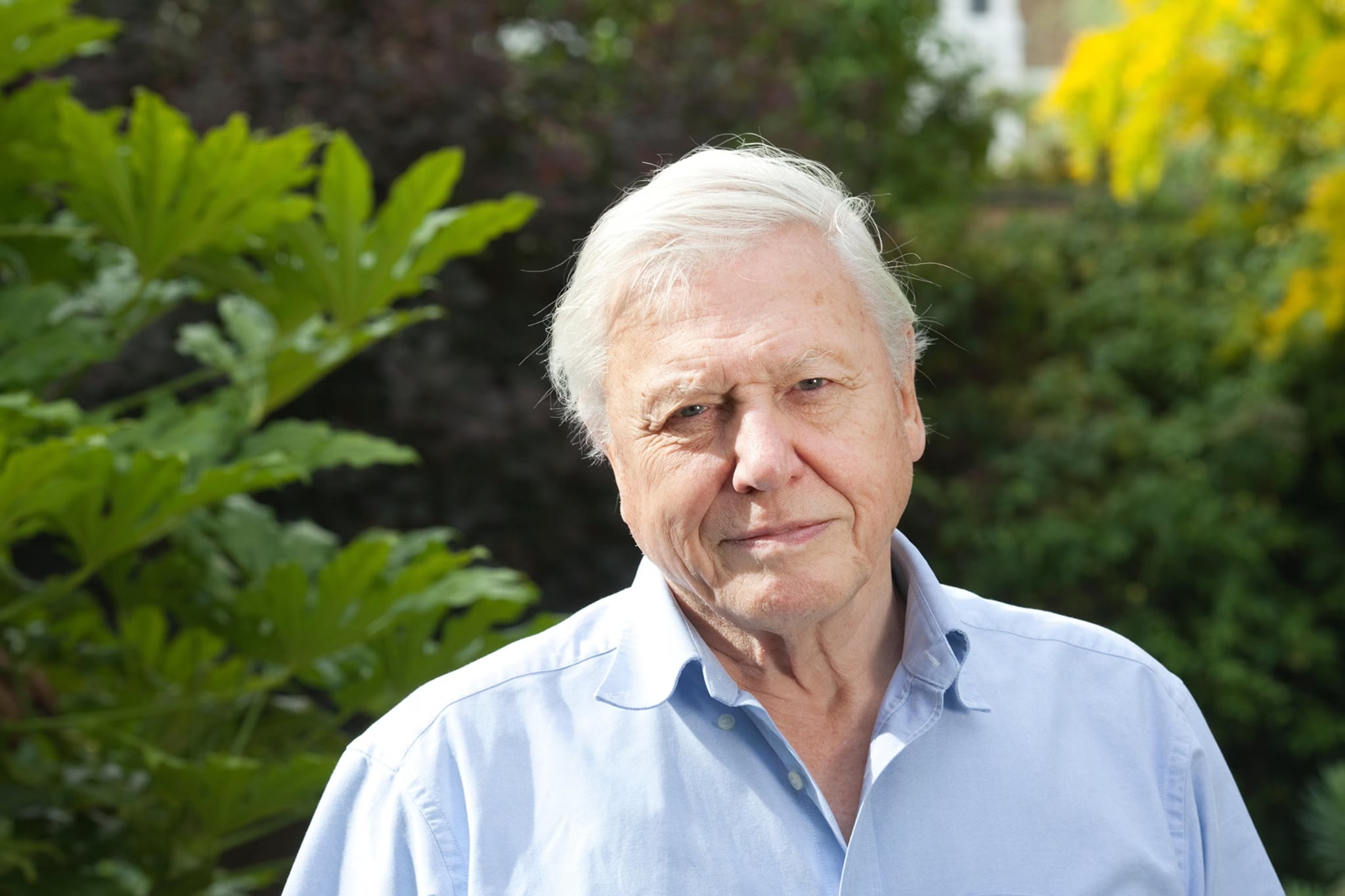


For nearly eight decades, one man’s voice has taken millions of people into the deepest oceans, the thickest rainforests, and the most remote corners of our planet. At 100 years old, Sir David Attenborough has witnessed a century of extraordinary change — and devoted much of his life to helping humanity understand the natural world.
Born long before television became a household necessity, David Attenborough grew up fascinated by fossils, animals, and the mysteries of nature. He could never have imagined that his childhood curiosity would eventually make him one of the most beloved broadcasters in history.
Today, his distinctive voice is recognized around the world. His documentaries have introduced generations to the beauty, complexity, and fragility of life on Earth.
But behind the legendary narrator lies an equally remarkable personal story — one filled with adventure, professional ambition, family devotion, heartbreak, and an increasingly urgent mission to protect the planet.
A Boy Who Fell in Love With Nature
David Frederick Attenborough was born on May 8, 1926, in Isleworth, Middlesex, England.
He grew up in Leicester, where his father, Frederick Attenborough, served as principal of University College Leicester. His mother, Mary, helped create a family environment that encouraged education and curiosity.
David was one of three brothers. His older brother, Richard Attenborough, would become an internationally acclaimed actor and film director, while his younger brother, John, pursued a career in the motor industry.
But David’s childhood interests were different.
He was fascinated by the natural world.
As a young boy, he collected fossils, stones, and other natural specimens, carefully examining objects that many people might have overlooked.
While other children were occupied with games and toys, David could spend hours exploring the countryside, searching for evidence of ancient life.
His curiosity was not simply about collecting unusual objects. He wanted to understand where they came from, how they formed, and what they revealed about the history of the Earth.
That fascination would eventually become the foundation of his life’s work.
He later studied natural sciences at Clare College, Cambridge, graduating in 1947.
At the time, however, there was no obvious career path for someone who wanted to combine scientific curiosity with storytelling on television.
The medium itself was still developing.
And David Attenborough was about to help change it forever.
The Unexpected Journey Into Television
After completing his education and serving in the Royal Navy, Attenborough began searching for a professional direction.
He briefly worked in publishing before applying for a position at the BBC.
In 1952, he joined the broadcaster as a trainee producer.
It was a decision that would transform both his life and the history of wildlife television.
At that time, nature programs were nothing like the spectacular documentaries audiences watch today.
Cameras were bulky, filming equipment was limited, and recording animals in remote locations presented enormous technical challenges.
Yet Attenborough recognized that television could introduce viewers to creatures and environments they might never encounter personally.
Rather than simply discussing animals inside a studio, he wanted to take audiences into the places where those animals actually lived.
That idea became central to his breakthrough series, Zoo Quest, which began in 1954.
The program followed expeditions to distant locations, combining adventure, scientific curiosity, and close encounters with wildlife.
For many viewers, it was their first opportunity to see such places through television.
The young presenter quickly became known for his enthusiasm, intelligence, and natural ability to explain complicated subjects in simple, engaging language.
His career had begun to take shape.
And the world was about to become his classroom.
The Dangerous Adventures That Changed Wildlife Filmmaking
Attenborough’s work was never limited to standing safely in front of a camera.
Over the decades, he traveled through rainforests, mountains, deserts, and oceans to document animals in their natural environments.
Some expeditions involved serious risks.
During the production of Life on Earth, which premiered in 1979, Attenborough and his team traveled through 40 countries over approximately three years, filming more than 600 species.
The crew encountered political instability, dangerous environments, and unpredictable wildlife.
One of the most unforgettable moments occurred in Rwanda, when Attenborough sat among mountain gorillas.
Instead of reacting aggressively, the animals approached him with curiosity.
The extraordinary footage revealed a gentle, intimate side of creatures that had often been misunderstood.
The series reached an estimated 500 million viewers worldwide and transformed expectations for natural-history television.
PBS+1
The Voice Behind Planet Earth and Blue Planet
As television technology improved, Attenborough continued pushing the boundaries of documentary filmmaking.
His landmark productions included The Living Planet, The Trials of Life, The Life of Birds, The Blue Planet, Planet Earth, Frozen Planet, and Planet Earth II.
These documentaries brought audiences closer to nature than ever before.
High-definition cameras revealed the delicate details of insects. Underwater technology exposed extraordinary marine ecosystems. Slow-motion filming captured animal behaviors almost impossible to observe with the naked eye.
Yet the technology alone did not make these programs unforgettable.
It was Attenborough’s storytelling.
He possessed a rare ability to transform scientific information into emotional experiences.
A tiny bird searching for a mate could become a story about determination. A mother elephant protecting her calf could become a lesson in family bonds. A fragile coral reef could reveal the interconnectedness of life.
For many viewers, his voice became inseparable from the natural world itself.
The Heartbreak Behind His Remarkable Career
Behind the global fame, Attenborough experienced a deeply personal loss.
In 1950, he married Jane Elizabeth Ebsworth Oriel. The couple welcomed two children, Robert and Susan.
Their marriage lasted nearly five decades.
Throughout much of his career, Attenborough spent long periods traveling for documentary productions. His wife helped maintain family life while he worked in distant locations.
In 1997, Jane suffered a brain hemorrhage and died.
Her death was devastating.
Attenborough later spoke about the enormous emptiness left by losing the person who had shared so much of his life.
Although he continued working, the loss remained one of the most painful experiences of his adulthood.
He never remarried.
His personal story is a reminder that even people admired by millions experience grief that professional success cannot erase.
From Wildlife Presenter to Defender of the Planet
As Attenborough grew older, his documentaries increasingly emphasized environmental destruction.
Throughout his lifetime, he had witnessed forests disappear, wildlife populations decline, oceans become polluted, and global temperatures rise.
The natural world he had explored as a young broadcaster was changing.
And he wanted audiences to understand what was happening.
His documentary David Attenborough: A Life on Our Planet, released in 2020, offered a particularly personal reflection.
Rather than simply presenting spectacular wildlife footage, Attenborough examined the environmental changes he had witnessed during his lifetime.
He warned that human activity was threatening ecosystems that support life on Earth.
But he also emphasized that solutions remain possible.
Protecting habitats, restoring ecosystems, reducing pollution, and changing unsustainable practices could help reverse some of the damage.
His message became increasingly urgent, but it was not entirely pessimistic.
He believed that humanity still had the ability to make better choices.
At 99, He Delivered One of His Most Important Films
On May 8, 2025, his 99th birthday, the documentary Ocean with David Attenborough was released.
The film examined the extraordinary importance of Earth’s oceans and the threats facing marine life.
Through remarkable underwater cinematography, viewers encountered coral reefs, kelp forests, and marine ecosystems essential to the health of the planet.
The documentary also exposed the destructive effects of certain fishing practices and other human activities.
But its central message was one of possibility.
Marine ecosystems can recover when they receive effective protection.
Attenborough described the film as one of the most important projects of his career.
After spending decades introducing audiences to the wonders of nature, he was now asking them to help preserve those wonders for future generations.
Revive Our Ocean+1
His 100th Birthday Became a Worldwide Celebration
On May 8, 2026, Sir David Attenborough reached an extraordinary milestone: his 100th birthday.
The BBC marked the occasion with special programming celebrating his contributions to broadcasting and natural history.
One major event, David Attenborough’s 100 Years on Planet Earth, was presented from London’s Royal Albert Hall, featuring orchestral performances and memorable moments from his documentary career.
Another special, Making Life on Earth: Attenborough’s Greatest Adventure, revisited the groundbreaking production that helped establish him as an international wildlife presenter.
And his 2026 series Secret Garden demonstrated that even at 100, Attenborough remained involved in telling new stories about the natural world.
Rather than focusing on distant rainforests or remote oceans, Secret Garden explored wildlife living in ordinary British gardens.
It was a fitting reminder that nature’s wonders are not always found thousands of miles away.
Sometimes, they are waiting just outside our doors.
Everything you need to know+1
A Record-Breaking Career Across Generations
Attenborough’s extraordinary longevity has produced achievements that few broadcasters could ever hope to match.
Guinness World Records recognized his exceptionally long careers as both a television presenter and a television naturalist.
By his 100th birthday, his television career had extended across more than 72 years.
He had worked through the eras of black-and-white television, color broadcasting, high-definition production, and modern digital filmmaking.
He also became the only person to win BAFTA awards for programs made in black and white, color, HD, and 3D.
In October 2025, at 99, he became the oldest recipient of a Daytime Emmy Award for his work on Secret Lives of Orangutans.
These achievements are extraordinary.
But his greatest accomplishment may be more difficult to measure.
He helped millions of people develop a deeper appreciation for animals and ecosystems they might otherwise never have known existed.
Guinness World Records+1
The Man Who Spent a Century Showing Us the Beauty of Life
There is something profoundly moving about Sir David Attenborough’s story.
He was born in 1926, when television was still experimental and much of the natural world remained mysterious to ordinary viewers.
He grew up collecting fossils and wondering about the creatures that once inhabited the Earth.
He became a young television producer when wildlife documentaries were still in their infancy.
He traveled the world, encountered extraordinary animals, and helped revolutionize how nature was filmed.
He experienced professional triumphs and personal heartbreak.
He witnessed remarkable scientific discoveries and alarming environmental changes.
And at 100 years old, he continued to inspire people to appreciate and protect the planet.
Few individuals have had such a lasting influence on the way humanity sees the natural world.
His voice has accompanied generations through moments of wonder, excitement, sadness, and discovery.
For some people, hearing him narrate a documentary brings back memories of childhood evenings spent watching television with their families.
For others, his films inspired careers in science, conservation, photography, or filmmaking.
And for millions more, he simply made the world feel larger, more beautiful, and more extraordinary.
A Living Legend Whose Message Matters More Than Ever
Sir David Attenborough’s story is not merely about a man who lived to be 100.
It is about someone who dedicated his life to understanding the planet and sharing its wonders with others.
His work reminds us that the Earth is home to an astonishing variety of living creatures, each playing a part in ecosystems that sustain life.
It also reminds us that these natural treasures cannot be taken for granted.
From a curious little boy collecting fossils in England to a world-famous broadcaster celebrating his 100th birthday, David Attenborough has spent a century discovering, documenting, and defending the beauty of our planet.
And perhaps that is why his legacy feels so meaningful.
He did not simply show us animals.
He helped us understand why they matter.
He did not simply explore the natural world.
He inspired us to care about its future.
And after 100 remarkable years, his life’s work continues to carry a message that will remain important for generations to come:
The natural world is extraordinary, and its future depends on what humanity chooses to do next.