MY PARENTS THREW ME OUT AT 18 WITH NOTHING BUT A BACKPACK, SPENT THE NEXT DECADE TREATING ME LIKE THE FAMILY FAILURE
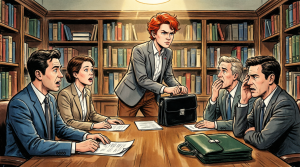
When the lawyer said my grandfather had left me everything, my mother smiled like she was about to be rewarded for surviving me.
My father leaned back in his chair and steepled his fingers, already wearing that smug, managerial look he always got when he thought life had finally arranged itself according to his preferences. Claire, my older sister, tilted her phone toward the light and checked her lipstick in the black screen, like three and a half million dollars were just another accessory that would eventually end up in her orbit. None of them looked shocked for more than a second. That was what struck me most. Not one of them thought, Why Oliver? They thought, How quickly can we take control of this?
That was the first thing my grandfather got right even after he was gone.
He knew them.
He knew that if his lawyer said the words entire estate and my name appeared anywhere in the same sentence, my parents wouldn’t mourn him for long. They would reorganize around the money. They would assume I was too soft, too uncertain, too inexperienced to hold onto something so big on my own. They would take the same old story they had told about me since I was a boy—that I was emotional, impractical, difficult, aimless—and they would use it like a crowbar.
The only thing they got wrong was this:
I was not eighteen anymore.
My name is Oliver Montgomery. I’m twenty-seven years old. And if you had told me ten years ago, when I was sleeping in the backseat of my rusted Honda with two changes of clothes and twenty-eight dollars to my name, that one day I’d be sitting in a lawyer’s office inheriting my grandfather’s entire estate while my parents stared at me like hungry animals, I would have laughed in your face.
Not because I didn’t believe in my grandfather.
Because I didn’t yet believe in myself.
The office where the will was read was the kind of place designed to make grief feel expensive. Dark oak walls. Framed certificates. Leather chairs that gave a little sigh when you sat down in them. Everything polished, quiet, and faintly old-fashioned, as though money moved differently there—more respectfully, more slowly. A grandfather clock stood in one corner beside a brass coat stand no one used. The attorney, Mr. Thompson, sat behind a wide desk with half-moon reading glasses low on his nose and my grandfather’s file laid open before him like a sealed account of the dead.
Outside, through the tall windows, the day looked gray and cold. Inside, the heat was too dry. I could feel it in my throat.
My mother was the first to speak after Mr. Thompson announced the number.
“Well,” she said, clapping her hands once, softly, the way she used to when Claire brought home perfect report cards or when people came over and she wanted the room to feel more gracious than it was, “of course that makes sense. Oliver was always so close to Dad.”
The sentence might have sounded affectionate to anyone who didn’t know her. But I did. My mother never wasted warmth without a purpose. Everything she said had a second meaning underneath it, and the second meaning here was clear: Yes, yes, this is sentimental, but now let’s move on to the practical adults who will obviously need to handle it.
She turned toward me with a smile so sweet it almost made me flinch.
“And naturally,” she said, “Oliver will need guidance. This is a lot for one person. We’ll step in, won’t we, dear?”
She looked to my father as if the decision had already been made.
He nodded slowly, almost solemnly. “Harold meant well,” he said, “but Oliver is not equipped to manage this kind of estate. Three and a half million dollars isn’t a gift. It’s a responsibility. It could ruin him if it’s mishandled.”
Ruin him.
That phrase ran through me like something cold.
To hear him say it, you’d think he was worried. Protective, even. But I knew the sound of my father’s concern. It always came wrapped around ownership. Whenever he said someone needed help, what he meant was that someone needed supervision. Whenever he said he was protecting the family, what he meant was that he wanted control.
Claire folded one leg over the other, leaned forward, and gave me that practiced little smile she had perfected in middle school when she wanted teachers to think she was being generous instead of cruel.
“Don’t take this the wrong way, Oliver,” she said, “but you’ve never exactly been… financially disciplined.”
There it was. My whole life reduced to one sentence, neatly varnished and set on the table for everyone to nod at.
Mr. Thompson cleared his throat before I could answer.
“If I may,” he said, voice measured and dry, “Mr. Montgomery’s instructions are explicit. The estate belongs to Oliver Montgomery alone. There are no trustees. No oversight provisions. No authority granted to other family members. Full control passes to him immediately.”
My father’s smile tightened. “Of course,” he said. “We’re simply speaking as family.”
He emphasized the word as if it meant something honorable.
It almost made me laugh.
Because family, in my parents’ house, had always meant hierarchy disguised as love.
Growing up, we were not poor. That was one of the more confusing parts of being the wrong child in the right-looking home. Poverty would have at least explained some things. But my parents had money in the way suburban families often do—careful, image-conscious money. Enough for a nice house in a tidy neighborhood. Enough for my father to wear pressed golf shirts and complain loudly about taxes. Enough for my mother to teach part-time and still act like she personally managed the economy of our entire town.
We had a wide green lawn that my father treated like a reputation. We had a dining room no one used except on holidays and when company came over. We had the kind of refrigerator that always looked full, the kind of driveway that always had cars worth washing.
And inside that house, Claire was royalty.
She was three years older than me and beautiful in the kind of symmetrical, high-school-movie way adults immediately reward. Blonde hair, easy smile, perfect posture, good at everything that could be photographed or praised at school assemblies. She was a cheerleader, honor roll student, student council darling, the daughter my mother introduced before Claire even entered the room.
She knew how to perform effortlessness. She knew when to laugh, when to pout, when to look wounded. My parents responded to her moods the way people respond to weather alerts. If Claire was upset, the whole house adjusted.
I was the opposite.
I liked books more than crowds, art more than football, silence more than performance. I asked questions when my father preferred obedience. I noticed unfairness before I knew how to survive it. That was my first real mistake in that house—not failing, but noticing.
My father liked sons with obvious ambitions. Boys who wanted trucks and business degrees and a place in the line of men who made sure their names stayed visible. He didn’t know what to do with a son who loved sketching old buildings in the margins of math homework or spent more time at the library than in the garage.
“You’ve always been too sensitive,” my mother liked to say, usually in moments when what she really meant was, It would be easier if you didn’t react to how we treat you.
Claire got a new car for her seventeenth birthday—mid-size, silver, the kind of car she posed beside with one hand on the hood while my mother cried over how grown-up she looked. When my seventeenth came around, my father tossed me the keys to his old sedan and said, “Be grateful it still runs.”
Claire’s college tuition was “an investment in her future.” Mine, when I brought up applications and aid packages, was treated like a test of character.
“If you want to go,” my father said, not looking up from the sports section, “you’d better figure it out yourself. Men earn their place.”
I remember standing there in the kitchen with brochures in my hand, hearing my mother say, without even malice, almost absentmindedly, “Oliver expects the world to hand him things.”
The line stunned me because all I had done was ask whether the support they had given my sister would be offered to me too.
That was how the game worked in our house. Claire received. I requested. Claire deserved. I expected. Claire was nurtured. I needed to toughen up.
The worst memory from that time is not one big dramatic blowout. It’s dinner.
Always dinner.
My father believed in using the dinner table as a stage. That was where pronouncements happened. Where lessons were delivered. Where Claire got praised and I got corrected in front of witnesses, which, in our family, meant each other.
One night, just a few months before I turned eighteen, he set his fork down, looked straight at me across the mashed potatoes, and said, “If you’re still under my roof at eighteen, you’re a failure.”
He said it casually. That was what made it stick. Not as anger. As policy.
Claire gave a little laugh into her water glass. My mother didn’t correct him. She passed the peas.
I laughed too, because what else was I supposed to do? Beg? Show hurt? In our house, visible pain was weakness, and weakness was an invitation for more.
But that sentence lodged in me.
If you’re still under my roof at eighteen, you’re a failure.
And when my eighteenth birthday came, he made good on it.
Some people get eased out of home. Some get a semester, a warning, a partial transition. My parents staged my exit like a lesson.
They sat me down in the living room the Saturday after my birthday. My mother had that fixed smile she wore when she wanted to appear reasonable in front of herself. Claire sat curled in an armchair, pretending to scroll on her phone but listening to every word. My father stood by the fireplace like he was about to deliver a speech to shareholders.
“It’s time,” he said.
I knew what he meant before the rest came.
He told me they were cutting me off financially. Told me adulthood meant consequences. Told me the world would not tolerate my excuses. My mother chimed in about responsibility and motivation. Claire said nothing, but her silence had the smugness of someone watching a prophecy come true.
They gave me no money. No apartment deposit. No transition period. No “come home if it gets bad.” Just a hard line and a backpack.
I remember going up to my room and standing there longer than necessary, staring at the walls. My room did not look sentimental. It looked temporary already, as though I had been living in an eviction notice for years and only now realized it. I packed two changes of clothes, some sketchbooks, toiletries, my beat-up laptop, and the few books I couldn’t bear to leave behind. Everything else stayed.
When I carried the backpack downstairs, my father was at the door with his car keys in hand.
“Take your own car,” he said. “I’m not making two trips for this.”
My mother hugged me briefly at the threshold, all perfume and practiced sadness.
“This is for your own good,” she whispered.
Then I was outside.
I drove for almost an hour before I stopped, not because I knew where to go but because I was afraid if I stopped too close to home I would go back and beg, and I had enough self-respect left not to do that.
That first night I slept in the backseat of my car in the parking lot behind a twenty-four-hour gym. The upholstery smelled like heat and dust. I kept one shoe on because I didn’t know if it was safer that way. Every set of headlights made me sit up. Every hour felt like something I had to survive rather than inhabit.
There’s a specific kind of loneliness that comes with being discarded by people who later call it love. It’s not dramatic. It’s practical. Where do I park? How do I shower? How long will this gas last? If my car dies, what am I then?
I had a part-time job stocking shelves at a home improvement store. It barely covered groceries before rent entered the conversation. I bought crackers and peanut butter and ate sitting in my driver’s seat with my knees pressed against the dashboard.
I didn’t call my parents.
I didn’t call Claire.
I almost didn’t call anyone.
The person who found me, in the end, was my grandfather.
Harold Montgomery had always been the only person in my family who spoke to me like I was already a real person instead of a project that had gone off-brand. He was my father’s father, though the two of them had spent most of my life circling each other like rival versions of manhood. My father inherited Harold’s broad shoulders and temper but none of his patience. Harold had done hard things in his life and therefore never mistook hardness for virtue.
He lived in a smaller house at the far edge of town, a weathered place with a workshop out back and a porch that leaned a little in spring because the ground shifted there after hard rain. He smelled like cedar, pipe tobacco, and whatever soup he had put on the stove that day. His hands were thick and scarred and always warm.
He called me the next afternoon because I missed our usual Sunday check-in.
“Where are you?” he asked after I answered.
“Working.”
“That’s not what I asked.”
Silence stretched between us.
Then he said, very quietly, “Come by when your shift ends.”
I did.
He opened the door before I knocked, took one look at my face, and stepped aside without making me explain.
There was stew simmering on the stove. The kitchen was warm. A baseball game muttered from the radio in the next room. He pointed at the chair by the table and said, “Sit. Eat.”
I made it through maybe four bites before the shame hit me hard enough to burn.
He watched me for a while. Not pressing. Just watching.
Then he said, “Your father finally did it.”
I nodded.
He shook his head once, like a man who had predicted a storm and hated still being right.
“You sleeping in that car?”
I said yes.
He didn’t say I could have told him sooner. He didn’t say he needed details. He didn’t ask what I had done wrong.
He just said, “You’ll sleep here tonight.”
That turned into more than one night. Not permanently, not then, but enough. Enough weekends on his couch. Enough meals. Enough quiet money tucked into my jacket pocket when he thought I wasn’t looking. Enough rides to job interviews and hardware store shifts when my car’s transmission started slipping. Enough space to remind me I had not been thrown away by the whole bloodline, only part of it.
I never gave him the full story of what my parents had done because even then I was protecting them from the humiliation of being known too accurately by the wrong person. But Harold didn’t need every detail. He saw the shape of things.
One night while I was fixing a broken cabinet hinge in his kitchen because I couldn’t stand sitting still with my own anger, he said, “You know what they’re counting on?”
I looked up from the screwdriver.
“That you’ll believe them.”
I said nothing.
He fitted a piece of kindling into the wood stove and added, “People like your father don’t have to win every argument. They just have to get you to carry their version of you around long enough that you start doing the work for them.”
I think about that sentence often. More now than then.
It took me years to stop carrying their version.
The decade after I was thrown out was not glamorous, and I don’t tell it like it was because suffering is not noble just because it taught you things.
I worked constantly.
First retail, then warehouse shifts, then admin work, then junior operations support at a logistics firm that paid badly but promoted internally if you outlasted enough people. I learned how to survive on little, how to bargain hunt, how to stretch bus fare and gas money, how to look presentable on three hours of sleep and a shirt ironed in a bathroom with hotel steam. I maxed out a tiny freshman credit card once because I used it for textbooks, food, and one car repair in the same month. Claire never forgot that. Neither did I. It became family folklore—evidence that I was irresponsible—while her tuition and spring break flights and post-college apartment deposit all disappeared into the category of parental support.
My parents went mostly silent after they cut me off.
Mostly.
Silence was their preferred punishment when they wanted me to understand my place. Then, every once in a while, when they needed something or wanted to perform civility, one of them would reappear.
My mother leaving a voicemail in her syrupy tone: “Oliver, honey, I was just thinking of you.”
My father once asking if I’d come help move patio furniture for a party, as though ten months of no contact had simply been a scheduling blip.
Claire sending photos from vacations or from her sorority events or later from the first house my parents helped her buy with the caption, Adulting looks good on me.
I learned to answer in short sentences. Or not at all.
Over time, I built a life that didn’t need their approval to function. Not a flashy life. A modest one. An apartment I could afford, if barely. A job that became a career because I kept showing up. A few good coworkers. A coffee shop I liked. A gym membership I used inconsistently. Cheap furniture chosen for utility rather than taste. It wasn’t glamorous, but it was mine.
And through all of it, Harold stayed.
He invited me for Sundays. He came to my tiny apartment once and pretended not to notice that one chair had a wobble and the freezer needed defrosting. He asked actual questions. How’s the work? What are you reading? You still drawing? He never asked why I didn’t go home for holidays. He knew.
When my mother got sick, he was the one who called me first—not because he believed I could fix anything, but because he knew I deserved the truth without performance wrapped around it.
When she got worse, he watched my father and Claire transform grief into logistics and optics, and I think something in him hardened for good.
By the time he got sick himself, I had begun to suspect he was planning something. Not the inheritance, not specifically. But something.
He had started asking odd practical questions.
Do you have a lawyer you trust?
Do you know the difference between being in a will and being protected by one?
Do you keep copies of important documents somewhere no one else can reach?
At the time I thought it was old age turning his mind toward paperwork and control. I didn’t realize he was making sure I knew how to survive the thing he already expected would come.
Then he died.
The call came on a Wednesday afternoon while I was at work and halfway through a spreadsheet I could not bring myself to care about five seconds later. Even though he’d been sick, even though the last time I visited I had known—truly known—that we were in the final stretch, the news still hollowed me out. Grief is stupid like that. It lets you rehearse and then refuses to use your notes.
I went to the funeral. Of course I did.
My parents were there in polished black. Claire cried at all the right moments. People shook my hand and told me Harold thought highly of me, which hurt more than silence would have because they were saying it in the past tense. My father gave the eulogy and somehow made half of it about duty and land and carrying on what matters. He said the word legacy like he had personally invented it.
I stood beside the grave and thought, You do not get to narrate him after you spent years resenting the parts of him you couldn’t control.
But I said nothing.
The lawyer’s call came three days later.
I assumed I’d get something sentimental. A watch. His workshop tools. Maybe the old chess set he kept in the cabinet by the fireplace. I never once imagined I’d walk into that office and find my parents dressed for acquisition.
After Mr. Thompson finished reading the main bequest and my parents began their performance of concern, he turned another page.
“There are additional instructions,” he said.
The room sharpened.
I can still hear the paper sliding under his fingers.
He read slowly, perhaps because he had been doing this long enough to enjoy moments when the dead got the last word.
Harold Montgomery’s estate, including all liquid assets, investment holdings, and titled properties, was to pass to me entirely. No one else was to act as trustee, manager, representative, or adviser by default. Any request for shared management had to be initiated by me alone, in writing, witnessed, and notarized after a waiting period. There were also, he said carefully, “supplemental directives to be disclosed if legal interference arises.”
My father shifted in his chair.
“What does that mean?” he asked.
Mr. Thompson removed his glasses, polished them once, and said, “It means Mr. Montgomery anticipated dispute and made provisions accordingly.”
I felt, for one instant, the shape of my grandfather’s mind behind the page. Precise. Patient. Unfooled.
It should have comforted me. Instead it made my throat ache.
Because even from the grave, he was still protecting me from the people who should have been least dangerous.
My parents did not leave that office defeated. They left strategizing.
That evening, Claire arrived at my apartment around nine without calling first.
She had a way of entering a space as if she were walking into her own conclusion. Heels clicking, expensive perfume trailing, one eyebrow lifted just enough to tell you she found your surroundings educational in the worst way.
When I opened the door, she looked me up and down and smiled.
“Cute place,” she said as she slipped past me into the living room. “For now.”
I shut the door more slowly than necessary.
“What do you want, Claire?”
She sat on my couch like she was testing a hotel suite and crossed her legs.
“I’m here to help you not embarrass yourself.”
I leaned against the counter between the living room and kitchen and waited.
She looked around with open disdain. My apartment was small, yes. Mismatched furniture. Rent-friendly lighting. One wall still blank because I’d never gotten around to hanging anything on it. To Claire, small always meant shame.
“Oliver,” she said, “you’ve been living small for so long you don’t even realize what three and a half million dollars actually means. This”—she waved a hand at the room—“won’t do anymore.”
“I didn’t realize the money came with an interior design consultant.”
She ignored that.
“Dad knows investments. Mom knows people. I know presentation. You let us help, and we can turn this into something bigger. But if you start making emotional decisions—buying random things, trusting the wrong people, trying to prove some point—you’ll lose everything.”
There it was. The old family trick. Frame your control as rescue. Frame resistance as childishness. Frame self-determination as recklessness.
“I’m not giving Dad control of anything,” I said.
Her smile thinned. “You really think Grandpa meant for you to do this alone?”
“Yes.”
A pause.
“You always were literal.”
“No,” I said. “I just learned to listen when someone says exactly what they mean.”
She stood then, all smooth irritation and resentment hidden under poise.
“You have no idea what you’re doing.”
I met her eyes.
“Neither do you,” I said. “You’ve just never had to admit it.”
That landed harder than I intended. Her face changed for half a second—not enough for a full crack, but enough to show something raw underneath all the polish. Then it was gone.
She left with a small, sharp laugh and a parting shot about how some people just don’t know when they’re being saved.
A week later, Mr. Thompson called.
His tone was clipped in a way I had not heard before.
“Oliver,” he said, “did you authorize anyone to represent you at the estate bank?”
“No.”
There was a beat of silence.
“Someone attempted to access the funds this morning. They claimed you had verbally authorized them to discuss transfers and provisional management. The bank flagged it because of the restrictions in the will.”
My grip on the phone tightened.
“Who?”
He exhaled. “Your parents.”
I knew it before he said it. Not because I was brilliant. Because they were predictable.
That night I drove past the house I had been thrown out of.
I hadn’t meant to. I was just driving without destination, the way I do when I need movement more than arrival. But then the old neighborhood appeared, and there it was at the end of the block exactly as it had always been—clean siding, porch light on, both cars in the driveway, the front window glowing gold behind the curtains my mother changed with the seasons.
I parked across the street and sat there.
The house looked safe. That was always part of the lie. Houses like that are why people don’t believe certain stories. The shrubs are trimmed. The shutters are painted. The mail gets collected on time. Nobody imagines you can be exiled from a place that has flowerpots on the porch.
I sat with my hands on the wheel and felt something colder than sadness settle in.
This was not just manipulation anymore.
It was theft dressed as family stewardship.
Then my phone buzzed.
Claire.
Don’t be naive, Oliver. Money belongs in the hands of people who know how to use it. Be smart or you’ll lose it all.
I stared at the message until the screen dimmed.
That was the moment something in me finally snapped all the way clean.
Not into rage. Into understanding.
They would never stop.
They would never see me differently.
They would never take my life as proof that I had survived them. They would only see it as temporary leverage until they could reassert the old order.
I went home and sat at my kitchen table in the dark.
The stack of bills in front of me wasn’t actually urgent. That was the irony. I could pay them now, easily. The inheritance had changed the numbers. But it had not changed the old fear yet. I was still treating every expense like evidence, every decision like a trial exhibit they might someday hold up and say, See? We told you he’d fail.
That was their deepest damage. Not what they took. What they trained me to doubt.
I sat there for hours replaying everything.
Being handed down used cars while Claire got new ones.
Hearing my father say if you’re under my roof at eighteen, you’re a failure.
Sleeping in my car.
My mother telling me their cruelty had “made me strong.”
Claire on my couch acting like my life was a dress rehearsal until she arrived.
The attempted bank access.
The rumors I was already hearing around town—the greedy grandson, the drifter who got lucky, the boy who didn’t earn what he got.
At some point after midnight, I opened the small junk drawer beside the kitchen table looking for a pen and found an envelope I had forgotten was there.
It was cream, slightly yellowed at the edges, my name written across it in Harold’s hand.
He had given it to me on my twenty-first birthday and told me to keep it “for a day when the room gets too loud.”
I had read it once, years ago, and tucked it away because at twenty-one everything still felt like future advice rather than survival gear.
I opened it again.
The letter inside was written on lined paper torn from one of his legal pads.
Oliver,
If you’re reading this, I hope you’ve learned by now that the world doesn’t give you anything it doesn’t try to take back.
Don’t let them.
You are stronger than you know, but strength is no use if you keep handing it to people who only respect their own reflection.
One day you’ll have to decide what you are worth without waiting for permission from anyone who profits from your doubt.
When that day comes, stand up straight.
They can only take from you what you agree not to defend.
Love,
Grandpa
I read it once.
Then again.
Then a third time, slower.
By the end, the room felt different.
Not warmer.
Not kinder.
Clearer.
My grandfather had known. Not just that my parents were capable of greed. That I was capable of becoming the man who could outlast it.
That night I started planning.
Quietly. Carefully. Without telling anyone.
I saved every text.
I requested documentation from the bank regarding the attempted access.
I printed the proposals my parents had begun mailing under the guise of “guidance.”
I wrote down every rumor I heard in town and who had repeated it.
I stopped reacting in real time.
At work, I began staying later—not because I wanted to hide, but because I wanted to learn. Estate structures. Trust protections. Property management. Tax implications. Asset diversification. I used public resources, library databases, and every boring legal article I could find. If my parents wanted to treat me like I was incapable, I was going to become so competent it would cut them to stand near it.
That period was lonelier than I expected.
Preparation always is. Nobody applauds quiet competence while you’re still building it. From the outside, my life probably looked the same: work, home, groceries, sleep, occasional dinners with coworkers. Inside, everything was shifting.
I hired a financial adviser named Richard after a colleague whose judgment I trusted mentioned him over lunch.
Richard was not flashy. That was the first thing I liked about him. He wore the same blue ties in rotation, took notes by hand on a yellow legal pad, and never once treated me like I was a lucky idiot with an oversized windfall. He asked good questions. Where did I want to live? What did I actually want the money to do? Security? Growth? Legacy? Did I want the estate to preserve me, expand me, or represent something?
No one had ever asked me questions like that about money.
By the end of our first meeting, he slid a clean, simple plan across the table. Tax strategy, diversified investment structure, emergency reserves, property options, short-term spending ceilings, long-term growth.
“You’re more than capable,” he said. “You’ve just been treated like you aren’t. That’s not the same thing.”
I walked out of his office feeling taller.
Not because he gave me permission. Because he confirmed what my grandfather had been trying to teach me all along: capability does not arrive the day someone acknowledges it. Sometimes it has been there for years, waiting for the noise around it to stop.
I bought a house six months later.
Not an estate property. Not some sprawling place meant to impress the same people who once sneered at my rented apartment. A modest home on a quieter street across town. Brick front, decent yard, sunlight in the living room in the afternoon. A place that felt like peace rather than performance.
The first night inside it, after the movers left and the boxes sat in tired stacks against the walls, I stood in the center of the empty living room holding my keys and let the silence wash over me.
No one could throw me out of this place.
That mattered more than the square footage.
At work, too, things changed. I had spent years being reliable enough to disappear into the machinery of competence. The inheritance did not make me better at my job, but something about the confidence that came with finally defending myself altered the way I moved through rooms. I volunteered for projects I would once have avoided. I spoke first in meetings instead of waiting to be asked. I stopped apologizing before offering ideas.
People noticed.
A promotion came. Not dramatic. Not life-altering. But real. My boss called me into his office, closed the door, and said, “You’ve got leadership in you, Oliver. You just don’t trust it yet.”
I started trusting it.
I never broadcast any of this to my family. Of course not. I wasn’t stupid. But in a town like ours, information seeps sideways. Someone’s cousin works with somebody’s husband. Someone sees your name on a board. Someone spots you at a property closing or hears you got the promotion. The whispers started shifting.
He bought a house.
He’s doing well.
Maybe Harold knew what he was doing after all.
The rumors my parents had seeded did not vanish overnight, but they began to compete with other facts. And facts, once they develop witnesses, are harder to smother.
Claire came to my new house one evening in late spring.
I didn’t let her inside.
She stood on the porch in cream heels and a fitted jacket, looking up at the brickwork as if judging whether it matched the life she preferred to imagine I should be excluded from.
“Nice place,” she said. “Did you decorate it yourself, or did you finally get someone to hold your hand?”
I leaned against the doorframe and smiled slightly.
“I’m doing fine, Claire.”
Her eyes narrowed.
“Don’t get cocky, Oliver. You think one house and a title bump mean you’ve won?”
Won.
The word told me everything.
She had never understood that my life wasn’t a scoreboard. That was how she survived in our family—keeping count, staying ahead, making sure someone else carried the role of failure so she could keep the role of success.
“Dad’s already looking into ways to—” She stopped herself.
My pulse didn’t change. Outwardly, at least.
“Into ways to what?”
She lifted one shoulder. “Protect the family.”
“There it is.”
“You always make everything sound sinister.”
I looked at her for a long moment.
“That’s because with you, it usually is.”
She left angry, which didn’t bother me. What mattered was the slip. Dad’s already looking into ways to… It confirmed what I already knew. They were not done. They were regrouping.
The next piece of the puzzle arrived in a room my parents would never have imagined me entering.
After my grandfather died, I had joined a local charity board that ran scholarships, emergency grants, and food support programs in the county. Harold had quietly donated to them for years. He never told anyone because he thought public generosity was often just reputation laundering in a better suit. Joining the board felt like a way to honor him without performing grief.
That was where I met Daniel Grant.
He was in his late fifties, silver-haired, dry-eyed, and calm in the way retired trial attorneys often are—like men who have spent so long around panic that they no longer mistake it for urgency. He and my grandfather had played chess together every Thursday night for almost a decade, something I learned when he shook my hand after a board meeting and said, “You’ve got Harold’s pause before you answer. He used to do that when he already knew he was right.”
We ended up having coffee the next week.
Halfway through it, he leaned forward and lowered his voice.
“You should be careful.”
The hairs on my arms lifted.
“In what way?”
“Your grandfather anticipated trouble after he passed,” Daniel said. “He made preparations. Legal ones.”
I went very still.
“What kind of preparations?”
Daniel smiled faintly. “The kind that only matter if someone oversteps.”
Over the next few weeks, Daniel became the missing bridge between what I suspected and what Harold had actually built.
The estate wasn’t just a pile of money and a house. It was structured. Carefully. There were investment accounts, yes, but also deeded properties, minority interests in two commercial parcels, a charitable trust in Harold’s name designed to fund educational and agricultural initiatives, and—most importantly—specific no-interference provisions that my parents had not been informed of at the initial reading.
If any family member attempted to represent me without authorization, interfere with estate control, petition to override my management, or coerce access through legal pressure, they would immediately forfeit any contingent gifts Harold had left them. Not a share of the main estate—they had not been left one—but smaller bequests, sentimental property allocations, and even a secondary life-insurance distribution my father clearly assumed was still coming his way.
Harold had not simply left me money.
He had left traps.
Lawful, notarized, beautiful traps.
Daniel showed me the relevant sections and said, with unmistakable satisfaction, “Your grandfather knew exactly what they’d do. He just wanted them to have enough rope.”
I laughed then. Really laughed. It startled me.
Because for the first time since the will reading, I realized I was not only defending myself reactively. I was standing inside a structure built by the one man in my family who had taken my character as fact rather than debate.
Daniel also gave me something else one evening after we’d been working through estate documents in his study.
A small leather-bound notebook with worn corners.
“Harold asked me to hold this until I felt you were ready,” he said.
My hands actually trembled when I took it.
Inside were pages of my grandfather’s handwriting. Notes. Reflections. Lists of local contacts he trusted, warnings about the ones he didn’t, reminders about the difference between an asset and a symbol, observations about my parents so exact they were almost funny.
Robert confuses authority with noise.
Your mother [he meant Claire’s and my father’s mother, his late wife] used to say our son never met a mirror he didn’t want elected.
Ashley will follow strength until she has to define it herself. That may take longer than either of us likes.
And then, toward the back, several pages underlined once in blue ink:
If Robert or Margaret attempt legal interference, do not negotiate in private.
Do not explain your worth to people who benefit from doubting it.
Let them put their greed in writing.
Paper is patient.
I ran my thumb over those words for a long time.
My grandfather had left me a playbook.
Not for revenge.
For posture.
For survival with dignity.
By the time summer turned, I was no longer just reacting to my parents’ schemes. I was positioned.
That was when they made their biggest mistake.
The call came from Daniel on a gray Tuesday morning.
“Oliver,” he said, and his voice had that clipped alertness people in law use when a line has officially been crossed, “your parents filed a petition this morning.”
“For what?”
There was a brief pause, maybe because even Daniel still found the language obscene.
“They’re seeking guardianship over the estate assets. They’re claiming you are financially inexperienced, emotionally compromised by the sudden inheritance, and unfit to manage the complexity of the holdings without external protection.”
Guardianship.
I actually laughed.
It wasn’t joy. It was the body’s disbelief at hearing absurdity spoken in a courthouse voice.
They were trying to have me declared effectively incompetent at twenty-seven so they could seize control of the money.
Publicly.
After everything I had built.
After the job, the house, the records, the adviser, the documented interference.
For a second, the old helplessness surged anyway. Not because they were right. Because they were willing to say it in front of strangers with legal authority. That still has power when your whole childhood was built around being told other people would naturally agree.
Then Daniel said, “This is good.”
I stopped pacing.
“Good?”
“Yes,” he said. “Because now they’re in the trap.”
He was right.
All those months of documentation. The letters. The bank attempt. The texts. The no-interference clause. Harold’s notebook. The rumors. The records of my employment, promotion, accounts, financial plan, clean tax history, property purchase, and advisory structure. We had all of it.
If they had stayed in the shadows, they might have kept wounding me for years.
By filing formally, they brought their greed into a room governed by evidence.
The hearing was set for the following month.
My parents went all in.
They hired a mid-level probate litigator from the city who wore expensive cufflinks and spoke to me in the hallway before the hearing like I was a misguided young man who might still be spared the ugliness of his own mistake if I had the sense to capitulate.
Claire arrived at court in ivory and navy, which was somehow perfect. She had always known how to dress for sympathy.
My mother dabbed at dry eyes. My father carried himself like he was about to win a zoning appeal.
I wore a dark suit, plain tie, clean shoes, and not much else in the way of theater.
Courtrooms are strange when you’ve spent years being underestimated. You walk in carrying the full weight of your own memory, and everyone else sees a posture they think they understand. To them I was still just the grandson with the lucky inheritance. To my parents I was the boy with the backpack. To the judge, at least at first, I was a file number with a family dispute and too much money.
Then proceedings began.
Their attorney went first, painting me exactly the way I expected.
An emotionally volatile young man.
Minimal financial history.
A pattern of instability in early adulthood.
Sudden access to wealth beyond his demonstrated capacity.
A vulnerable position made worse by manipulative outside advisers.
He mentioned the old credit card.
My years of renting.
The fact that I had no spouse, no children, no traditional financial mentor inside the family. He cast independence as evidence of isolation. Self-support as instability. Silence as immaturity.
Claire testified that I had always been “sensitive around money” and prone to grand plans that didn’t match reality. My mother cried when she described “wanting only to protect” me. My father said he feared I would “fall prey to opportunists.”
The whole thing might have been convincing if not for the part where every one of them had already written down their greed in too many places.
When it was Daniel’s turn, he stood slowly and did not perform.
That was his genius. He understood that truth looks strongest when it doesn’t beg for applause.
“Your Honor,” he said, “what we have here is not a guardianship issue. It is not a question of competence. It is a failed acquisition attempt dressed as concern.”
Then he started laying out the paper.
The bank report documenting my parents’ attempt to access the estate funds by falsely presenting themselves as my authorized representatives.
The letters from my mother and father proposing I “delegate control” for tax reasons, property reasons, investment reasons, and, in one astonishing sentence, “to preserve family dignity.”
Claire’s texts implying I would embarrass myself without them.
The timeline of rumors traced back to their social circle.
My employment records. My tax filings. My mortgage approval. My advisory agreements. My promotion letters.
Then the estate clause.
Daniel held up the notarized pages from Harold’s will and read them aloud in full.
If any family member attempts by coercion, misrepresentation, or legal petition to obtain authority over the estate contrary to the sole discretion granted to Oliver Montgomery, all contingent bequests otherwise due to said interfering party shall immediately be revoked and redirected to the Harold Montgomery Educational Trust.
My father’s expression changed then. Just slightly. But enough.
He hadn’t known.
Neither had my mother.
Neither had Claire.
Daniel let the silence sit before adding the final piece.
“And because Mr. Montgomery anticipated that some might claim after the fact that this wording was accidental or emotional,” he said, “we have an additional document.”
He lifted the leather notebook.
“In his own handwriting, Mr. Montgomery described his concerns about his son and daughter-in-law’s longstanding pattern of manipulation and his confidence in Oliver Montgomery’s capacity to act independently. He wrote, and I quote, ‘If they attempt to take what is not theirs, it will be proof enough of why I chose Oliver.’”
The words hit the courtroom like a door slamming shut.
My mother actually went pale.
Claire looked down so fast it was almost a flinch.
My father’s hand tightened into a fist on the counsel table.
The judge read the notebook entry himself, then the clause again, then the bank report.
When he finally spoke, his voice was almost bored in the way judges sound when they’ve decided contempt isn’t worth emotional effort.
“The petition is denied,” he said. “The estate remains solely in the control of Oliver Montgomery. The court further finds that the petitioners’ claims of incompetence are not supported by the evidence and appear to have been filed in direct contradiction to the explicit wishes of the deceased.”
He turned a page.
“Additionally, the court recognizes the triggering language of the no-interference provision and directs that all contingent bequests formerly designated to the petitioners be transferred in accordance with the will.”
That was the sound of Harold winning from the grave.
But the judge was not done.
“This court cautions the petitioners,” he went on, “that any further attempt to interfere with the administration of this estate may expose them to sanctions, including costs and additional civil liability.”
Closed.
Less than an hour, and it was over.
My parents had walked in expecting control.
They walked out having disinherited themselves.
In the hallway after the hearing, my mother made one last attempt.
She reached toward me, her voice trembling with that old false tenderness.
“Oliver, sweetheart, we only did this because we were worried. You don’t understand how much pressure this is.”
I looked at her hand in the air between us and then at her face.
For years that word sweetheart had made me feel like a boy being corrected by someone who believed correction was love.
Not anymore.
“No,” I said. “You did it for yourselves.”
Her hand froze. Then slowly dropped.
My father muttered something under his breath. Maybe a curse, maybe my name. He never met my eyes.
Claire stormed ahead toward the parking garage, her heels cracking across the marble floor like something brittle breaking in real time.
I stood there a moment longer than necessary just to feel what it was like.
Not triumph.
Not vengeance.
Release.
The weeks afterward were like watching a building settle after the support beams have been pulled and everyone is pretending they never leaned on them.
The town turned first.
Not all at once. Small towns never admit correction cleanly. They adjust by degrees, by pauses in conversation, by invitations that stop arriving, by people who suddenly remember another version of events they had been too comfortable to mention before.
At the country club, my mother’s circle cooled. Women she’d lunched with for years began greeting her with that pinched smile reserved for people who have become inconvenient to stand beside. One woman—whose son I had once helped through a college application essay because he was too embarrassed to ask his parents—stopped me outside the grocery store and said quietly, “I’m sorry. We didn’t know.”
It wasn’t enough to heal anything. But it mattered.
My father’s reputation cracked differently. He was a man who had built his sense of self on being competent, consulted, steady with money, the one who always knew the angle. Having a public record showing he’d tried to seize his son’s inheritance under false pretenses did not play well in a county where trust still functioned like currency. His company heard about the hearing. Clients heard. Suddenly “financial judgment” became a phrase people used around him with visible caution.
Within months he was pushed into an early retirement wrapped in polite corporate language and an insultingly nice watch.
Claire’s fall was the most dramatic because she had the farthest to drop socially. She had built herself on being the golden child, the polished one, the woman who had everything under control because she had never had to survive without a safety net. After the hearing, people looked at her and saw not glamour but appetite. Her boyfriend—who had loved the status of being adjacent to my family’s money more than he loved anyone in it—left before winter. By Christmas she had moved back in with our parents.
The three of them in one house again.
It would have been poetic if it hadn’t been so sad.
Meanwhile, my life widened.
The estate was not just a number in an account. It was possibility structured into reality. Under Richard’s guidance, I diversified the holdings, stabilized the properties, funded the trust projects Harold cared about, and established long-term security so complete it almost frightened me at first. Not because wealth corrupts by magic, but because anyone who has known real instability takes a while to trust comfort when it arrives honestly.
I expanded the charity board work into something bigger, helping launch a grant initiative in Harold’s name for kids from working families who needed what I had once needed most: a first real chance without humiliation attached to it.
At work, my promotion led to another one. People who had once overlooked me now asked for my opinion first. I discovered that leadership, when not modeled as domination, felt less like power and more like usefulness without resentment.
That was new.
And inside all of it, something even more important happened.
My parents’ voices started fading from the center of my mind.
Not disappearing entirely. I’m not sentimental about healing. It leaves residue. There are still days when I hear my father in my head if I hesitate too long before a big decision, still moments when I catch my own success and instinctively brace for someone to sneer that I got lucky. But the difference now is that I recognize those voices as echoes, not instructions.
One evening, months after the court hearing, I drove past my parents’ house again.
The same porch light was on. But the lawn was overgrown now. The hedges uneven. One shutter hanging a little crooked, the paint at the edges beginning to blister. The house looked tired. Not poor. Not ruined. Just worn down in the way places do when the people inside them spend more energy maintaining grievances than walls.
I parked across the street and sat there with the engine idling.
For a long time I just looked.
That house had once represented everything I thought I had failed to deserve. Safety. Legitimacy. Belonging. Approval. I had spent years measuring myself against the version of worth it seemed to confer on Claire and withhold from me.
Now it looked smaller.
Not physically. Psychologically.
A container for a story I had finally outgrown.
Memories moved through me in pieces.
The dinner table.
The car keys.
The first night in the Honda.
Claire laughing over her new MacBook.
My mother calling cruelty “preparation.”
My father saying I’d never make it without him.
Harold sliding a bowl of stew toward me and not asking what I’d done to deserve being thrown away.
For a long time, I had imagined revenge as a moment. Sharp. Public. Final.
It turns out revenge, when it’s real and clean, often looks like distance. Like not needing the people who once defined your worth badly enough to keep arguing with them about it. Like sitting across from the house that exiled you and feeling nothing but gratitude that it failed.
I rolled down the window and let the cool air in.
Then, because no one else needed to hear it but me, I said aloud the words my grandfather had spent years trying to teach me.
“I decide what I’m worth.”
The sentence felt simple. It also felt like the end of a war.
I put the car in gear and drove away.
That was the final cut, really. Not the courtroom. Not the inheritance. Not even the moment my parents realized they had lost their last leverage. The final cut was internal. The moment I understood that being thrown out of that house had not made me less. It had forced me to become without their permission.
They had tried to make me disposable.
They had tried to make me grateful for scraps.
They had tried to turn my survival into evidence that I never deserved more.
Instead, every cruel thing they did forged exactly the kind of man they would later be unable to control.
My grandfather saw that before I did.
And in the end, maybe that was the real inheritance.
Not the money.
Not the properties.
Not the trust.
The certainty.
The kind that cannot be loaned, stolen, managed, or voted away.
The certainty that they were wrong about me.
That I was never the weak link.
That I was never the failure.
That I did not need their approval to become whole.
By the time winter settled in, I had all but stopped thinking of my parents as opponents. That surprised me at first. Hatred takes more energy than peace, and peace takes a while to trust when you were raised on conflict. But there it was. Quiet mornings in my own kitchen. Work that mattered. A house that stayed mine when I woke up. A trust doing good in Harold’s name. A life assembled from choices instead of apologies.
Sometimes I still read the birthday letter.
The paper is softer now from being unfolded so often. The ink has not faded.
They can only take from you what you agree not to defend.
At eighteen, I didn’t know how to defend myself. At twenty-one, I barely knew what there was in me worth defending. At twenty-seven, standing in a courtroom while my parents tried to have me declared unfit, I finally understood the full force of what he meant.
Defense is not noise.
It is not bitterness.
It is not becoming as cruel as the people who hurt you.
Sometimes defense is just this:
learning.
documenting.
waiting.
standing still while other people reveal themselves.
and then, when the moment comes, refusing to hand over what was always yours.
My parents thought the money would change me.
It did.
Just not the way they expected.
It didn’t turn me arrogant or reckless or grateful to them.
It turned me visible to myself.
And once that happened, their power had nowhere left to live.
So no, I did not drown in the inheritance.
I did not hand it over.
I did not become the cautionary tale they so badly wanted.
I built a life.
I honored the man who believed in me.
I learned that being chosen by someone wise can feel less like luck and more like a responsibility to finally become what they already knew you were.
And I left the rest behind.
Not because I was heartless.
Because I was done mistaking survival for belonging.
When I think of Harold now, I do not picture the funeral or the will or the courtroom. I picture him on his back porch at dusk, shirt sleeves rolled up, one hand around a chipped coffee mug, looking out over the field behind his house like patience itself had taken human form. I picture the way he used to glance sideways at me before saying something that would take me years to fully understand.
He did not save me from my parents.
He did something harder.
He left me the means to stop asking them who I was.