Part 1
Two weeks after I made the final payment on my 2024 BMW, I came home to an empty driveway.
For five years, that car had been my private finish line. I’d run toward it in small, unglamorous strides: overtime shifts in the cardiac unit, skipping weekend trips, packing lunches that smelled like microwaved broccoli, picking up extra holidays because the differential pay stacked up faster than any “treat yourself” moment ever could. I wasn’t rich. I wasn’t married. I wasn’t the kind of woman my family bragged about at church. But I had a goal, and at thirty-one, I’d hit it with my own two hands.
The night everything cracked open started like any other Tuesday. I left Providence General with the fluorescent hum still buzzing behind my eyes and my shoulders carrying the leftover weight of other people’s fear. I changed out of scrubs in the locker room, tied my hair into a knot, and walked into the parking garage with my tote bag digging into my elbow.
My phone lit up with a text from Brittany.
Drinks?
I stared at it for a second, thumb hovering, then typed, Can’t. Dead on my feet.
Traffic downtown was lighter than usual. Portland in late fall always felt like it was holding its breath between rainstorms, the air crisp and sharp enough to make you feel awake even when your body begged for sleep. I stopped at my favorite Thai place and grabbed pad see ew, extra broccoli. The smell filled my car as soon as I set the bag on the passenger seat, soy and garlic and something sweet that made me feel, for a moment, like I was taking care of myself.
My apartment complex had assigned parking. My spot was always the same, right near the entrance where the light didn’t flicker and the security camera aimed just enough to make you feel safer than you probably should.
I turned into the lot, half on autopilot, and my brain didn’t register the problem until my tires rolled past the space where my BMW was supposed to be.
There was nothing there.
Just asphalt and a faded white line.
I slowed, blinked hard, and told myself I’d parked somewhere else that morning. It happened sometimes after a double shift. The mind does weird things when it’s running on caffeine and obligation.
I drove through the lot once. Then again. Then I circled the outer row, heart tapping faster, pad see ew cooling in my lap like it knew dinner wasn’t going to happen the way I’d planned.
The third time I passed my empty spot, denial finally let go.
My car was gone.
My stomach dropped so hard I thought I might actually throw up. My hands started shaking as I pulled my phone out, and my thumb hovered over 911 like it didn’t want to be the one to confirm this was real.
The dispatcher answered with calm professionalism, and I forced myself to speak clearly.
“My car’s been stolen,” I said. “I just got home. It’s not here. I live at—”
She asked for my address, make and model, license plate, the last time I’d seen it. I answered like I was giving a report at work, like it was someone else’s crisis. She told me an officer would arrive within the hour to take a statement.
When I hung up, I stood in the cooling air beside my empty parking spot, clutching a bag of takeout like it was the last normal thing I had left. It wasn’t just the financial hit, though that alone made my throat tighten. It was the violation. The feeling that someone had reached into my life and plucked out something I’d earned.
Then, because my brain was scrambling for footing, I thought of my dad.
Lawrence had helped me research security features when I bought the BMW. He’d sounded proud back then, even if my mother had pursed her lips and asked whether I really needed something so expensive. Ashley, my younger sister, had rolled her eyes when I sent photos and made a comment about sports sedans being impractical.
But Dad had said, That’s my girl.
So I called him, because that’s what you do when the world tips sideways. You call the person who’s supposed to steady it.
He answered on the third ring. I could hear the TV blaring in the background, crowd noise and a commentator’s voice. Football, probably.
“Hey, sweetheart,” he said, like nothing in the world was wrong.
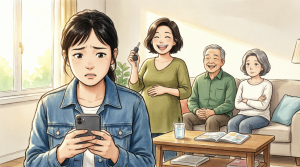
“Dad,” I said, and my voice cracked in a way that made me hate myself. “Someone stole my car. I just got home and it’s gone. I called the police, but I don’t know what to do.”
There was a pause, just long enough for my hope to lean forward.
Then he laughed.
Actually laughed, loud and easy, like I’d told him something cute.
“Nobody stole your car, honey,” he said. “We gave it to Ashley.”
For a few seconds, the words didn’t connect. They floated in the air like puzzle pieces from a different box.
“What do you mean you gave it to Ashley?” I said.
“Your mother and I talked about it,” he said, his tone shifting into that confident, final voice he used when he wanted the conversation to end. “Ashley’s got the baby coming, and she needs reliable transportation. You’re single. You live close to the hospital. You could walk if you had to.”
My mouth went dry. “Dad, that’s my car. I paid for it. I paid it off two weeks ago.”
“Don’t be dramatic,” he said.
In the background, I heard my mother’s voice, muffled but sharp, like she was punctuating his words with her agreement.
“We’re a family,” Dad continued. “Family helps each other. Ashley and Brett can’t afford a new car right now. They need something safe.”
“Ashley doesn’t even have a license,” I said, the sentence tasting like something poisonous.
“She’s been sober for eighteen months,” my father shot back, like sobriety erased the fact that she’d lost her license after her second DUI. “And Brett can drive it. They’ve got responsibilities now.”
I stared at the empty space, my mind catching up in jagged leaps. “How did you even get my car?”
“Your mother has your spare key, remember?” he said. “From that medical conference last year. You gave it to her in case someone needed to move it for street cleaning.”
I did. I had. In good faith. Like an idiot who thought her parents wouldn’t weaponize trust.
“That doesn’t give you the right to take my property,” I said, forcing my voice to level out. “Tell Ashley to bring it back. Right now.”
Dad’s tone hardened. “Listen. Your sister is about to be a mother. You spend all your money on yourself anyway. Fancy apartment, expensive car. It won’t hurt you to make this sacrifice.”
“I worked for five years for that car,” I said, my throat burning. “Every payment came from my paychecks.”
“And your mother and I paid for your college,” he snapped. “Or did you forget? We never asked for a dime back. The least you can do is help your sister.”
The logic was so twisted my brain almost stalled. A gift turned into a debt. My success turned into a resource they could redistribute. Ashley’s pregnancy turned into a permission slip.
“You stole my car,” I said quietly.
“We didn’t steal anything,” he said, and I could hear the smile in his voice. “We’re reallocating family resources. Ashley needs it more than you do. End of discussion.”
He hung up.
I stood there with my phone pressed to my ear, pad see ew cooling into sadness, and I realized something with a clarity so sharp it felt like pain.
This wasn’t a misunderstanding.
This was who they were when they thought they could get away with it.
Headlights swept into the lot, and a patrol car rolled up. A uniformed officer stepped out, mid-forties, kind eyes that looked like they’d learned how to stay gentle anyway.
“I’m Officer Martinez,” she said. “You the caller?”
I nodded, throat tight, and gave her the basics. Make, model, license plate, VIN. When she asked if I had any idea who took it, my stomach twisted like it wanted to protect my family from the consequences they’d earned.
I hesitated for maybe half a second.
Then I told her the truth.
“My parents took it,” I said. “They used my spare key. They gave it to my sister without my permission.”
Officer Martinez’s expression didn’t change, but something in her eyes sharpened into focus. “Do you want to press charges?”
That question landed heavy. It was the hinge.
If I said no, the story would become another family tale about how I overreacted and then calmed down. They’d keep the car. Or they’d “return it” later, like a favor, after making me beg.
If I said yes, I’d be setting something in motion my family would never forgive. Holidays would fracture. My mother would likely cut me off. Ashley would cry and call me heartless. Dad would tell everyone I’d betrayed them.
But I’d already been betrayed.
I looked at the empty space where my car should be and felt the weight of five years of overtime settle into my bones.
“Yes,” I said. “I want to press charges.”
Officer Martinez nodded and began writing, her pen moving steadily like the law itself was calm even when my life wasn’t.
“Do you know where your sister lives?” she asked.
I swallowed. “Yes.”
“Okay,” she said. “We’ll start there.”
As she drove away, my phone buzzed again. My mother. Then Ashley. Then my father, calling back like he thought he could still steer this.
I didn’t answer.
I walked upstairs with my cold dinner and my shaking hands, and for the first time in my life, I didn’t rush to smooth things over.
I let the consequences come.
Part 2
I didn’t sleep.
I tried. I lay in my bed with the lights off, listening to the muffled noises of my building settling, the occasional car passing outside, and every time my mind started to drift, I heard my father’s laugh again. Casual. Certain. Like my panic was entertainment.
Around midnight, my phone started buzzing in waves. The same three names on the screen over and over, as if repetition could wear down reality.
Mom.
Ashley.
Dad.
I watched it light up, go quiet, light up again. I didn’t answer. I didn’t even decline. I just let it ring until the calls went to voicemail, because I didn’t trust myself to stay steady if I heard their voices.
When I finally checked messages, it was exactly what I expected.
My mother’s voice, sharp with righteous anger, telling me I was selfish and ungrateful. Ashley crying, insisting she couldn’t believe I’d call the police on family, as if I’d invented the theft just to hurt her. My father demanding I call it off immediately or “face consequences,” like he was still in charge of the scoreboard.
At two in the morning, I opened my contacts and blocked all three numbers. My thumb hovered for a second over my dad’s name, because some part of me still carried that childhood reflex to hesitate before disappointing him.
Then I pressed block.
My apartment felt too quiet afterward, like I’d sealed myself inside a new version of my life without asking permission.
The next morning, Officer Martinez called.
“We located your vehicle,” she said. “It’s at your sister’s residence. She’s been cited for possession of a stolen vehicle. You’ll need to come down with proof of ownership to have it released back to you.”
My lungs emptied in a rush I hadn’t realized I’d been holding. Relief came first, then anger so sharp it made my hands go cold again.
“She claimed our parents gave it to her as a gift,” Officer Martinez added. “But the title is in your name. Legally, it’s straightforward.”
I took a personal day from the hospital and drove to the address I knew too well, the small house on the other side of town where Ashley lived with Brett. It was a gray day, clouds hanging low, like the sky was trying to match my mood.
My BMW sat in their driveway.
Seeing it there felt surreal, like finding your own coat on a stranger. Wrong in a way that made your skin crawl.
Officer Martinez was already there. She greeted me with a nod and asked for my license, registration, the title information I’d pulled up through the DMV app. I handed everything over with hands that still didn’t feel entirely mine.
Ashley burst out the front door like a storm in human form.
She was five months pregnant, cheeks flushed, hair pulled into a sloppy ponytail. Her eyes locked onto me, and her face twisted with fury.
“You’re insane!” she screamed. “Mom and Dad gave me that car!”
“They gave you my car,” I corrected, and my voice surprised me by coming out calm. “The car I own. That’s called theft.”
Ashley’s jaw dropped like I’d slapped her. “It’s called being part of a family!” she shouted back. “But you’ve always been selfish. Everything has to be about you.”
Officer Martinez stepped between us, her posture firm but not aggressive. “Ma’am,” she said to Ashley, “the vehicle belongs to her. The title is in her name. Your parents had no legal authority to transfer ownership.”
Brett appeared in the doorway, heavier than the last time I’d seen him at an awkward birthday dinner, his face drawn and tired in the way new-parent stress shows up before the baby even arrives. He looked like he wanted to argue, but he kept his hands on the doorframe like he didn’t trust himself.
“This is ridiculous,” he muttered. “We were told the car was ours.”
“You accepted stolen property,” I said, and the words came out colder than I meant, but I didn’t take them back. “You could’ve asked to see the title. You could’ve questioned why my parents would give away a car that isn’t theirs. You didn’t, because you wanted it.”
Ashley’s face crumpled as if she’d hit an invisible wall. Tears spilled over, sudden and messy. “We needed this,” she choked. “We can’t afford something safe for the baby. Brett’s truck is falling apart.”
For half a heartbeat, sympathy flickered. Not for the theft, not for the entitlement, but for the raw fear underneath it. The kind that makes people grab whatever they can.
Then I remembered my father laughing at me. My mother holding my spare key like a weapon. The complete disregard for five years of sacrifice.
“That’s not my problem,” I said. “I didn’t make your choices.”
Ashley’s sobs turned into angry gasps. “You’re a monster,” she hissed.
Officer Martinez held my keys out. “Here,” she said gently. “You can take possession now.”
I slid into the driver’s seat, and a new wave of violation hit me. The car smelled like Brett’s cologne and cheap fast food. A crumpled bag sat in the back. Ashley’s prenatal vitamins were in the cup holder like they’d already moved in. The mirrors were adjusted wrong. The radio was on some station I never listened to.
They hadn’t just taken it. They’d started living in it.
I drove back to my apartment with my jaw clenched so tight it ached. The city looked the same, people walking dogs, cyclists weaving through traffic, coffee shops humming. My private disaster didn’t register on anyone else’s face.
When I got home, I spent an hour cleaning the car like I was scrubbing contamination. Fast food wrappers. A hair tie looped around the gear shift. Receipts from gas stations I’d never been to. A smear on the touchscreen that made my skin crawl.
Then I found a pacifier wedged between the seats.
I stared at it for a long time, my throat closing up, because it meant they’d already pictured the baby in the backseat of my car. They’d already imagined their future seated inside something I’d earned.
I took photos of everything before throwing it out, the way my attorney brain had started waking up even though I didn’t have an attorney yet. Evidence. Documentation. Dates. I bagged the trash and labeled it with a marker like it was a specimen. It felt excessive. It also felt like the only way to stay in control.
That evening, my neighbor Mrs. Patterson knocked on my door. She was in her seventies, gray hair neatly curled, the kind of woman who knew the building’s gossip the way other people knew the weather.
“I saw your parking spot empty yesterday,” she said. “Then I saw the police. Everything all right?”
I gave her the bare version. She listened, and her expression went from concern to outrage so fast it made me blink.
“Your own parents,” she said, shaking her head. “In my day, family meant you could trust people, not that they could rob you blind.”
Rob. The word hit harder because it was so simple.
That night, I made tea at two in the morning and sat at my kitchen table with a notebook. I started writing down every time I could remember Ashley being protected from consequences while I was expected to handle everything myself.
The list poured out like it had been waiting years for permission.
Ashley dropping out of community college after one semester, my parents consoling her and saying school wasn’t for everyone.
Me struggling through organic chemistry, my dad telling me to work harder because nursing school wasn’t going to get easier.
Ashley getting fired for showing up late, my mother blaming the manager for being inflexible.
Me asking to borrow their car once when mine was in the shop, my father lecturing me about planning better.
The pattern was so obvious on paper it made my chest tighten. Ashley was the fragile one who needed saving. I was the sturdy one who could be used.
And when I succeeded, when I bought something I was proud of, it became a resource they felt entitled to redistribute.
By dawn, I had five pages of notes and a new kind of exhaustion, the kind that comes from seeing clearly.
Three days later, the next punch arrived in my mailbox.
A cease and desist letter, printed on a law firm’s letterhead, representing my parents.
They were threatening to sue me for emotional distress and defamation.
I stared at the words until they blurred, and then something inside me went quiet and steady, like a door clicking shut.
Fine, I thought.
If they wanted lawyers, I’d get one.
Part 3
Gregory Whitman’s office sat in a sleek downtown building with a view of the river, the kind of place that smelled faintly like money and lemon floor cleaner. When I walked in, my heart tried to climb into my throat, but I forced my shoulders back the way I did before walking into a difficult patient room.
A receptionist with glossy hair took my name, and a few minutes later Gregory himself appeared in the doorway.
He was in his late forties, clean-cut, wearing a suit that looked expensive without screaming about it. His eyes were calm in the way you want from someone who handles conflict for a living.
“Claire?” he asked, and I nodded, following him into his office.
I handed him the cease and desist letter. He read it without changing expression, then set it down like it was a flyer for a pizza place.
“Do they have any legitimate claim?” I asked.
“None,” he said. “This is intimidation. They’re hoping you’ll back down because conflict feels worse than being wronged.”
“They can’t sue me for filing a police report?” I asked.
“They can try,” he said. “They won’t win. A police report based on facts is not defamation. Emotional distress claims require them to prove you acted with malicious intent instead of protecting your property rights.”
He leaned back slightly. “The question is what you want next.”
I hesitated. The word next felt heavy. It meant choosing a direction with consequences.
“We can send a response telling them to stop harassing you,” he said. “Or we can go on the offensive. Civil suit for conversion. Damages. Legal fees. Stress. Time off work. Even though you got the car back, you were harmed.”
The thought of suing my own parents made my stomach turn. The thought of letting them threaten me into silence made it worse.
“Start with a response,” I said. “Make it clear I’m not backing down.”………………………………………………………………………
 :
: 
